Webinar Funnels: The Complete Guide to Turning Webinars into Clients
Funnel Builders Expert builds complete sales funnels, marketing funnels, and automation systems for service-based businesses that want more qualified leads, more booked calls, and more paying customers without getting buried in technical setup.
Introduction: Why Webinar Funnels Still Work
A webinar funnel is a structured marketing and sales system that moves prospects from their first interaction with your brand all the way through to becoming a paying client. For online coaches, consultants, and course creators, it remains one of the most reliable ways to sell high-ticket offers at scale.
The numbers back this up. 51% of B2B marketers find webinars effective for lead generation, and that figure climbs even higher among businesses selling programs priced above €1,000. Webinar funnels turn cold prospects into paying customers by combining education, trust-building, and strategic follow-up into a single repeatable process. They allow businesses to reach a global audience, increasing brand visibility far beyond what a one-on-one sales call could achieve. Webinars can increase engagement and build trust with potential customers in ways that static content simply cannot match.
Before diving in, here are a few terms you will encounter throughout this guide:
- Live webinar: delivered in real time with audience interaction.
- Webinar funnel: the full system from ad click to registration, attendance, offer, follow-up, and sale.
- On demand webinar: available for viewing whenever the registrant chooses.
- Evergreen webinar: continuously available, either on demand or on recurring schedules.
- Automated webinar: pre-recorded and delivered on a set schedule without live hosting.
At Funnel Builders Expert, we build done-for-you webinar funnels and complete client acquisition systems for coaches, consultants, and course creators. This guide is designed to be practical and implementation-focused. By the end, you will know how to design a full webinar funnel from ad click to booked sales call and follow-up emails.
What Is a Webinar Funnel? (And How It Differs from "Just Doing a Webinar")
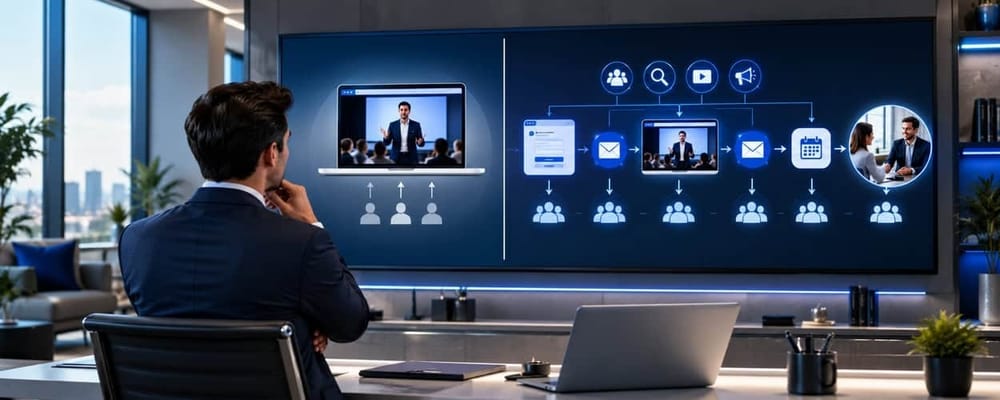
Most coaches and consultants have hosted a live event at some point. They present, answer questions, and hope attendees convert. A webinar funnel is different because it is a specialized marketing and sales system that wraps around that presentation with deliberate touchpoints designed to maximize conversions.
A webinar funnel typically consists of five key stages for engagement: registration, reminders, presentation, offer, and follow-up. Here is what makes it fundamentally different from "just doing a webinar":
- A webinar funnel is the full customer journey: ad or content → landing page → registration → confirmation → reminder sequence → webinar → offer → follow-up → sale.
- Webinar funnels can run as one-off launches, ongoing evergreen webinar funnels, or fully automated webinar systems that generate leads around the clock.
- They are especially effective for products and services that require education and trust to convert, which is why they pair naturally with high-ticket offers (€1,000–€10,000+) sold by coaches and consultants.
- Webinar funnels help establish trust and credibility with prospects through repeated value-driven touchpoints before, during, and after the presentation.
- Hosting webinars without a funnel means you are leaving money on the table at every stage where leads could be nurtured.
- It guides leads to become paying customers through a structured, measurable process, rather than relying on hope.
The Core Webinar Funnel Stages (From Click to Client)
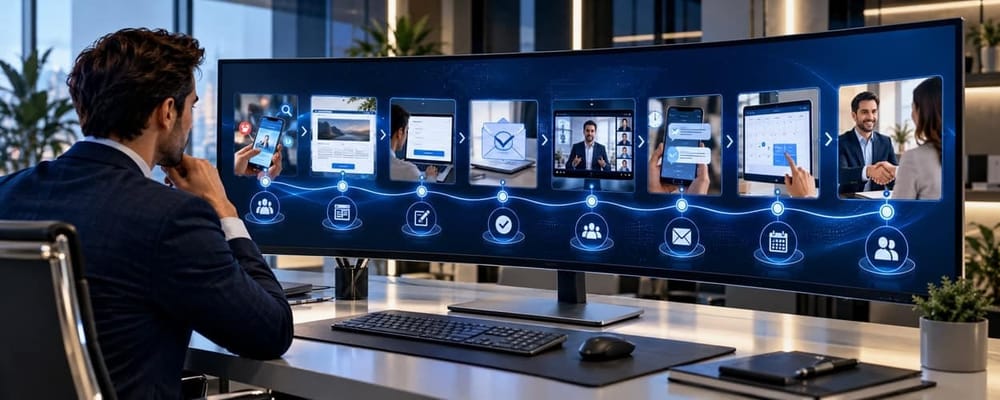
Understanding each stage of your funnel lets you identify exactly where leads drop off and where to focus your optimization efforts. Here is the full flow:
- Traffic and awareness: Meta Ads, Google Ads, content marketing, partnerships, and social media platforms drive prospects toward your registration page.
- Sales call, checkout, and onboarding: Qualified applicants move to a call or payment page, then immediately into onboarding sequences designed to deliver early wins.
- Follow-up emails and retargeting: Over 3–7 days, you send replays, objection-handling content, case studies, and deadline reminders. Behavioral segmentation determines what each registrant receives.
- Offer and call to action: For high-ticket coaching or consulting, this usually means an application form or strategy call booking rather than a direct checkout.
- Live webinar or automated webinar delivery: The core presentation where you teach, build credibility, and present your offer. Typically 60–90 minutes.
- Pre-webinar warm-up: Confirmation emails, automated email reminders at 24 hours, 3 hours, and 15 minutes before the event, plus optional SMS. These sequences directly impact how many attendees actually show up.
- Landing pages and registration: A focused registration page converts traffic into registrants. High-performing funnels in the €1,000–€5,000 offer range see registration conversion rates of 35–45% from paid traffic.
High-conversion rates are common in webinars due to pre-qualified attendees who have already invested time registering and watching. But drop-offs between stages are real. Without optimized reminders, show-up rates for live webinars typically hover around 25–40%. Webinars provide educational value to help potential customers understand the offer before they are asked to buy.
Metrics from each stage of a webinar funnel help identify areas for improvement. Measure opt-in rate, show-up rate, watch time, offer click rate, and application completion rate separately.
Choosing the Right Webinar Strategy: Live, Automated, or Evergreen
Not every webinar format fits every stage of business growth. Here is how to decide:
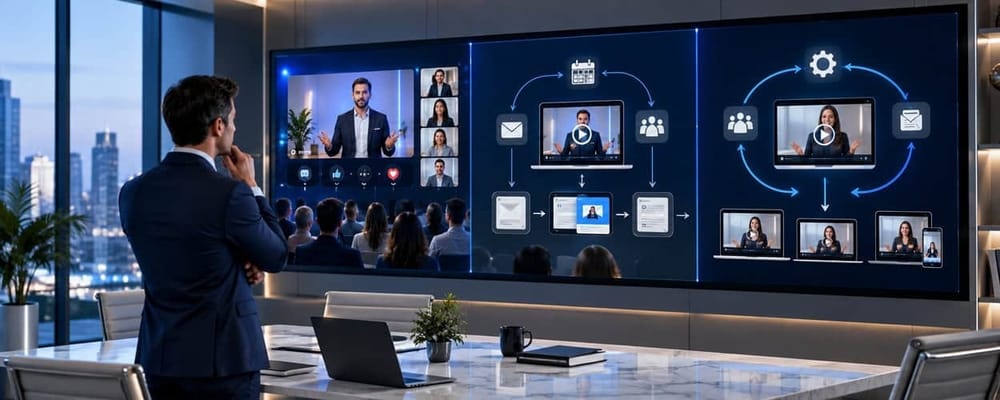
- Live webinars involve real-time participation from the audience. They bring urgency, energy, and the ability to handle objections on the spot. Use them when your offer is new, you are still refining your messaging, or your audience is small enough to engage directly. Best for proof-of-concept during your first 3–6 months or until you have hit €30,000–€50,000 in revenue.
- Automated webinars can run on a schedule without live hosting. You record once and replay on set dates, often with simulated interactive elements like chat and polls. Automated webinars can continuously generate leads without live hosting, but the webinar content must be polished and the offer well-tested.
- Evergreen webinars are pre-recorded and available for viewing at any time, either on demand or through scheduled just-in-time sessions. They are the ultimate scaling tool for lead generation webinars, but only after your live version has proven conversion metrics.
A hybrid approach is often the sweet spot: run quarterly live webinars to maintain energy, gather fresh social proof, and test new messaging. Simultaneously, run a 24/7 evergreen funnel for ongoing lead generation. Automated webinars can generate leads without live hosting, freeing you to focus on delivery and growth.
The key principle: never automate a funnel that has not been validated live. Scaling weak metrics just wastes ad budget faster.

How to Design a High-Converting Webinar Topic and Promise
Your webinar topic determines whether anyone registers in the first place. Webinars help establish brands as industry leaders through valuable insights, but only if the topic connects directly to your core offer.
- Reverse-engineer from your offer: If you sell a 12-week coaching program for agency owners, your webinar should teach the framework or roadmap that program delivers. The webinar is the appetizer, not the full meal.
- Target a specific audience segment: "Online fitness coaches who want to scale to €10,000/month" outperforms "coaches" every time. Niche clarity improves ad relevance, registration rates, and show-up rates.
- Validate before building: Survey your email subscribers, poll followers on social media platforms, or ask current clients what they struggle with most. Testing the topic before investing in landing pages and ad spend saves significant resources.
- Craft a "big promise" title: Combine a specific outcome, timeframe, and mechanism. Example: "How to Fill Your Calendar with 10–20 Qualified Sales Calls Per Week Using an Evergreen Webinar Funnel." This is far stronger than "Learn About Webinar Marketing."
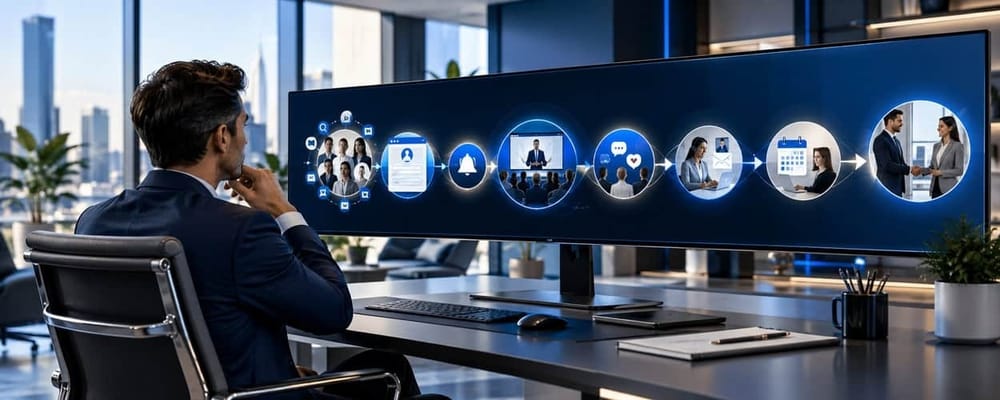
Mapping the Webinar Funnel Customer Journey
Here is how a typical prospect moves through the funnel, touchpoint by touchpoint:
- Meta Ad or Google Ad targeting a specific pain point (e.g., "Scale your consulting business to €50k/month through webinar funnels")
- Sales call booking or direct purchase, followed by onboarding emails delivering an immediate first win
- Post-webinar follow-up over 3–7 days (replay links, objection handling, social proof, deadline)
- Offer page with program breakdown, bonuses, guarantee, and application form or checkout
- Live webinar room or automated session (teaching, roadmap, case studies, offer)
- Reminder sequence via email and optional SMS (24-hour, 3-hour, 15-minute reminders)
- Thank-you/confirmation page with "add to calendar" link and immediate confirmation email
- Webinar registration landing page with promise, pain-point-focused copy, and a simple opt-in form
Example timeline: A prospect clicks an ad on 12 March, registers immediately, receives confirmation and reminders, attends the webinar on 14 March, fills out an application the same day, books a sales call within 24 hours, and enrolls into a €3,000 program by 20 March.
Webinars can be promoted through ads, email campaigns, and partnerships. They allow businesses to reach a global audience without geographical limits, which means your funnel can serve prospects across every time zone.
At Funnel Builders Expert, we typically design and automate this entire journey in a single integrated CRM and marketing automation system.
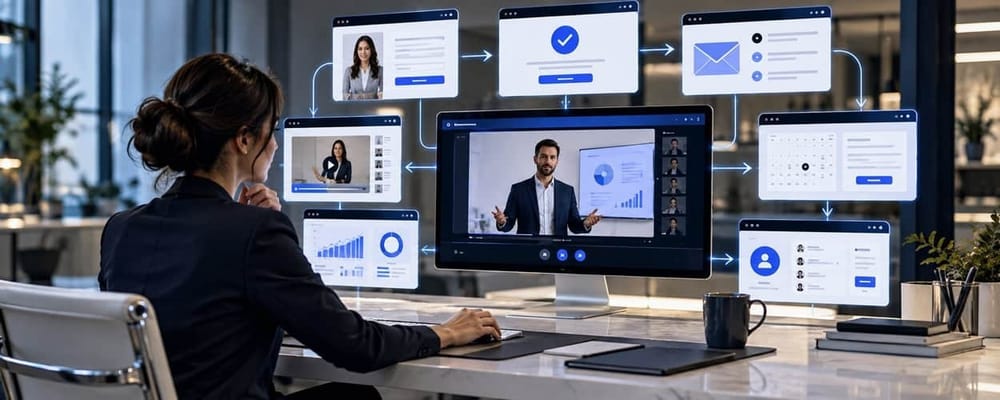
Essential Webinar Funnel Assets You Need in Place
Before launching, make sure these assets are ready:
- Registration landing page: headline, promise, minimal form (name and email)
- Bonus asset (e.g., VIP checklist PDF or bonus training) to lift registration and attendance rates
- Retargeting ad creatives: targeting registered non-attenders, attendees who did not convert
- Follow-up email sequences: replay access, objections, proof, urgency
- Application or order form: for high-ticket, use an application; for lower-priced offers, direct checkout
- Offer page: program breakdown, bonuses, guarantee, pricing
- Webinar room: reliable platform for your chosen format (live, automated, or on demand)
- SMS reminders (optional but effective for boosting show-up rates)
- Show-up reminder emails: 3–5 emails for live events; fewer for evergreen. Automated reminder sequences help reduce drop-off rates and improve attendance.
- Confirmation page: calendar links, login details, what to expect
Every asset must be consistent in branding, message, and call to action. Engaging content and strategic follow-up are essential in a successful webinar funnel. If your ad says one thing and your registration page says another, you will lose prospects at every handoff.
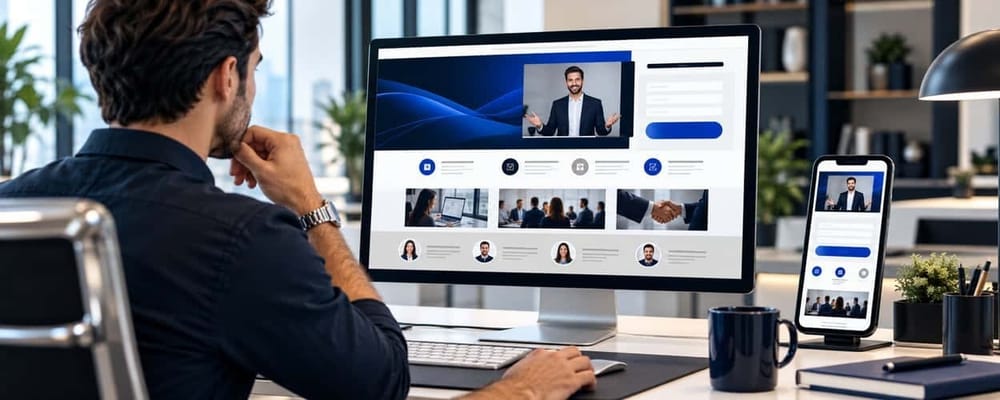
Building High-Converting Webinar Landing Pages
Your registration pages are where the funnel lives or dies. Webinar registration pages should focus on a benefit-driven headline and clear takeaways. Here are the essential features:
- Benefit-focused headline: speak to the outcome your attendee will achieve, not just the topic
- Clear CTA button: "Save My Seat" in a contrasting color
- Simple opt-in form: name and email only to reduce friction
- Social proof: testimonials, past attendee numbers, client logos
- Short host bio: credentials, relevant results, origin story
- Bullet list of key takeaways: 3–5 specific things they will learn
- Capacity note: "Limited to 100 live attendees" creates urgency around how many attendees can join
- Date and time with time zone support (or multiple sessions for global audiences)
- Subheadline: elaborate on the promise with specificity
Design best practices: use a clean, single-column layout with minimal navigation and custom branding that matches your ad creative. Mobile responsiveness and fast load times are non-negotiable since traffic from Meta Ads is overwhelmingly mobile.
At Funnel Builders Expert, we A/B test multiple versions of headlines and hero sections to improve conversion rates before scaling ad spend.
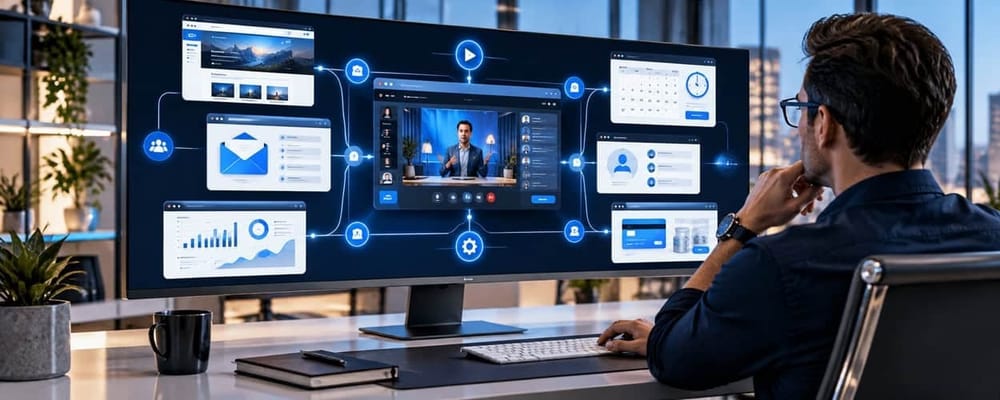
Picking the Right Webinar Platform and Tech Stack
Your webinar tools matter, but strategy should always come first. The right webinar tool is one that supports your funnel needs, not just the one with the most advanced features.
Here is what to evaluate when choosing a webinar platform:
- Reliability and scalability: Can it handle your attendee volume with consistent audio quality and streaming?
- Built in analytics: Can you track engagement data, watch time, and drop-off points for data driven decisions?
- Interactive features: Does it offer live polls, interactive polls, Q&A sessions, breakout rooms, and a green room for pre-show preparation?
- CRM and automation integration: Can it push registrant behavior (registered, attended, left early, clicked offer) into your CRM to trigger automated email sequences?
- Format support: Does it support live webinars, automated webinars, and evergreen webinar scheduling?
Here is a quick comparison of popular options across various platforms:
Platform
Key Strength
Notable Detail
Zoom Webinars
Reliability, large audiences
Hosts over 9 million webinars annually
GoTo Webinar
Enterprise features, town halls
Strong for virtual conferences and paid events
Demio
Funnel-friendly
Supports both live and automated webinars
EverWebinar
Evergreen automation
Allows scheduling of pre recorded webinars
WebinarNinja
All-in-one simplicity
Integrates with over 1,000 tools via Zapier, automates email reminders and registrations, allows unlimited attendees during its 14-day trial
YouTube Live
Reach
Allows unlimited viewers for webinars
Google Meet
Budget-friendly
Supports up to 100 attendees on its free plan
Airmeet
Customization
Offers customizable event spaces with customization options
Some coaches also use Zoom meetings for smaller group sessions or YouTube Live to stream webinars live to large audiences. The right webinar platform should integrate with your landing pages, email marketing system, and CRM on one platform so behavior-based follow-ups trigger automatically.
At Funnel Builders Expert, we help clients select and implement the right webinar platform as part of a done-for-you system, connecting it with their existing marketing automation workflow.
Structuring Your Webinar Presentation to Sell Without Feeling "Salesy"
Webinar presentations should spend significant time on education before introducing an offer. Here is a recommended structure for a 75–90 minute live event:
- Opening hook (5 minutes): State what they will learn and why they should stay. Create anticipation.
- Final call to action (2–3 minutes): Clear, urgent, limited. A compelling call to action can guide attendees to the next steps, whether that is booking a call or submitting an application.
- Q&A (10–15 minutes): Address objections live. Use interactive tools like polls and Q&A to gather feedback and pre-collect questions during the teaching section.
- Offer breakdown (10–15 minutes): Features, bonuses, benefits, guarantee, pricing. Be transparent.
- Offer introduction (5 minutes): Transition naturally by connecting a teaching point to the mechanism your program delivers. Avoid the jarring "pitch switch."
- Case studies and proof (woven throughout): Real client stories with numbers. This is your social proof in action.
- Teaching section (30–40 minutes): Deliver a roadmap or framework that gives genuine value. Nest case studies and proof within the teaching. This is where viewer engagement lives or dies.
- Credibility and origin story (5–10 minutes): Share your background, why you are passionate about this topic, and relevant transformations you have achieved.
Aim for 70–80% value-driven webinar content and 20–30% oriented around the offer. Use interactive elements throughout to maintain real time engagement and reduce early drop-offs.
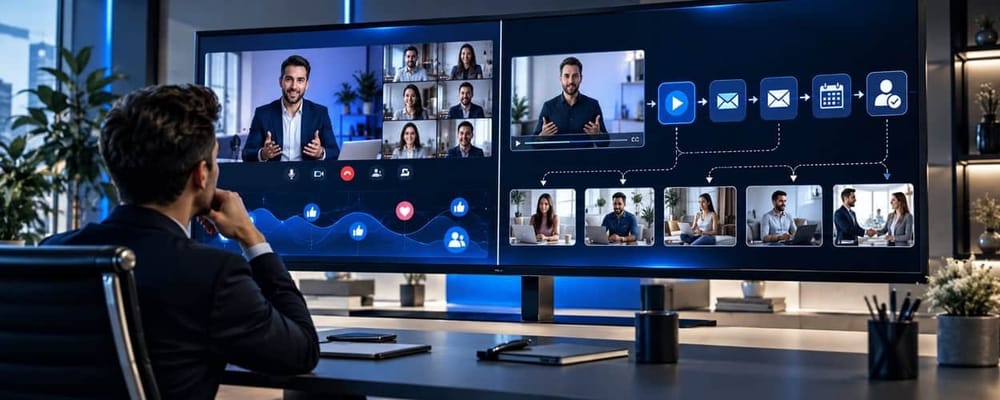
Live Webinars vs. On-Demand Replays and Evergreen Funnels
Live webinars typically produce higher engagement and close rates because of urgency, real-time interaction, and the energy of a live event. But they require you to show up and present every time.
On demand replays offered for 48–72 hours after a live webinar capture registrants who could not attend. Follow-up emails pushing urgency ("replay expires in 48 hours") with replay links drive additional conversions from this group. Long recordings can be trimmed to highlight key moments.
Transitioning to an evergreen funnel means taking your recorded live webinar, removing date-specific references, and setting up scheduled or on demand sessions that run automatically. Automated webinars can increase attendee show-up rates to 75–80% when paired with strong reminder sequences, because registrants choose a time that works for them. Webinar automation helps convert attendees into customers efficiently by maintaining the same content quality at scale.
An automated webinar funnel is ideal for scaling lead generation and client acquisition without the founder needing to present live every week. Many successful operators run both formats simultaneously: live for fresh energy and proof, evergreen for consistent pipeline.
Pre recorded sessions and pre recorded video content work well here, especially when you pre record content from a validated live webinar that already converts.
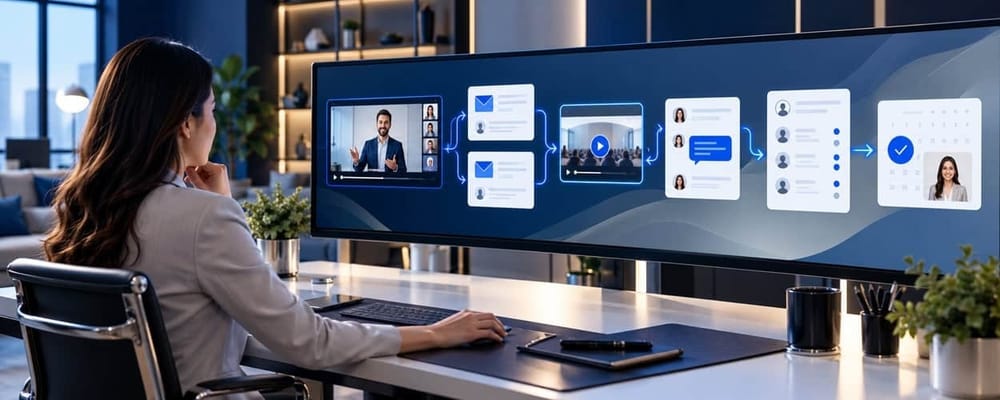
Follow-Up Emails, Nurture Sequences, and Replays
Most sales happen after the webinar, not during it. Follow-up email sequences are crucial for converting attendees into customers.
Pre-webinar reminders:
- Immediate confirmation email with calendar link and detailed information about what to expect
- Optional SMS at 15 minutes (this alone can lift show-up rates significantly)
- 15-minute reminder with direct join link
- 3-hour reminder building anticipation
- 24-hour reminder with a teaser of the webinar content
Post-webinar follow-up (3–7 days):
- Day 1: Replay access with key takeaways
- Day 2: Case study or client transformation story
- Day 3: FAQ and objection handling (price, time, belief)
- Day 4–5: Bonus deadline reminder with urgency
- Day 6–7: Final call with scarcity and social proof
The follow-up sequence can include replays, key takeaways, and urgency reminders tailored to each segment. Automated follow-up emails can increase attendee engagement across every segment.
Behavior-based segmentation matters:
- Attended full webinar → application reminder sequence
- Clicked offer but did not buy → objection-handling series
- Left early → condensed replay with highlight reel
- Registered but no-show → replay sequence with fresh hook
At Funnel Builders Expert, we write and automate all follow-up emails so coaches and consultants can focus on delivery and sales conversations. Learn more about how a funnel builder structures these systems.
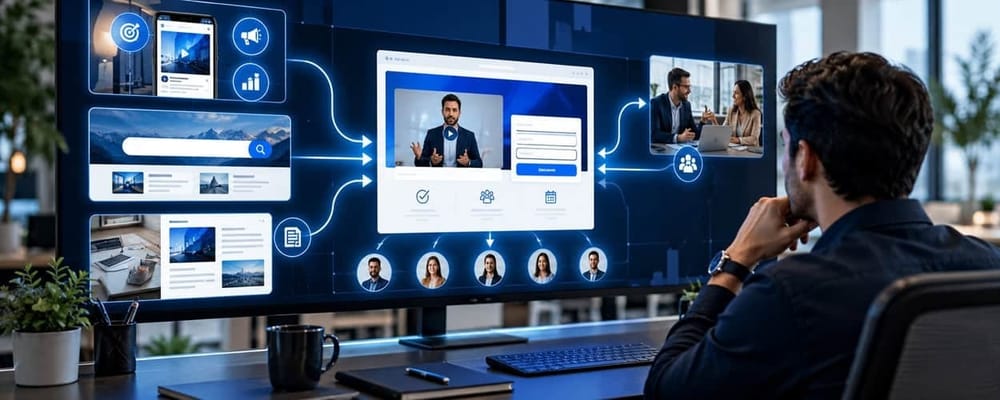
Driving Traffic into Your Webinar Funnel (Ads, SEO, and Partnerships)
Even the best funnel fails without traffic. Webinars can generate leads and sales when executed effectively, but only if qualified prospects are entering the top of the funnel. Webinars can generate high-quality leads for businesses across multiple channels:
- Meta Ads (Facebook and Instagram): Best for cold audiences. Use video creative and lead magnets. Usually the lowest cost per registration but leads need warming through the funnel.
- Joint ventures and partnerships: Co-host with aligned audiences, cross-promote, or use affiliate partners. Strong for credibility and filling seats without always spending ad budget.
- SEO and content marketing: Blog posts, YouTube videos, and podcasts feed evergreen content into your funnel over time. This is especially powerful for generating leads through evergreen webinars. For more on this approach, see our guide on SEO for lead generation.
- Google Ads: Target high-intent search queries from prospects actively researching your outcome. Higher cost per lead but stronger intent.
Worked example: In the Flairlist case study, Meta Ads drove traffic to a webinar registration page with a small paid registration fee to filter intent. The funnel produced 4.52× ROAS in its first week: 109 registrations at $3.31 each, 8 strategy sessions, and 1 mentorship sale generating approximately $1,372. Paid events at registration can dramatically improve lead quality.
Marketing teams should also leverage free trials of webinar software and dedicated webinar tools to test ad-to-webinar flows before committing to annual contracts.
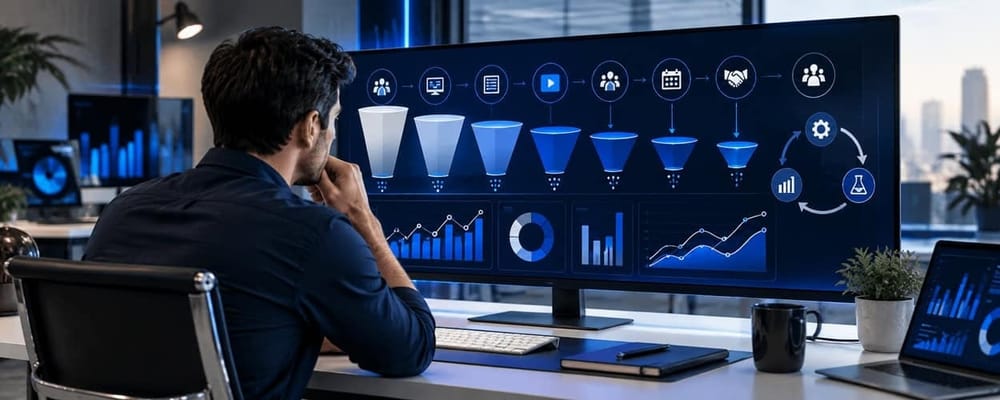
Tracking, KPIs, and Optimizing Your Webinar Funnel
You cannot improve what you do not measure. Here are the key metrics to track, with benchmark ranges for coaches and consultants:
Metric
Benchmark Range
Notes
Landing page opt-in rate
30–45% from cold traffic
Test headlines and form placement
Registration-to-attendance rate
25–40% (live), 50–60%+ (optimized)
Reminders and SMS are the biggest levers
Average watch time
60–75% of total length
Drop-offs during teaching signal content issues
Offer click-through rate
20–25% of attendees
Clarity of offer and transition matter
Application/checkout completion
5–15% of attendees
For validated high-ticket offers
Revenue per 100 registrants
Varies by offer price
Your north star metric
ROAS (Return on Ad Spend)
3–5× for mature funnels
Track cost per registration, per attendee, per client
Use Google Analytics alongside your webinar platform's built in analytics to track the full journey. Webinar performance should be reviewed weekly during active campaigns.
Optimization sequence:
- Improve landing pages first (highest volume impact)
- Review industry trends and update messaging quarterly
- Adjust traffic sources and ad creatives
- Refine follow-up emails and segmentation
- Strengthen creating webinars content and offer positioning
- Boost show-up rates with better reminders and confirmation sequences
At Funnel Builders Expert, we build dashboards inside your CRM or analytics platform so you can monitor each stage of the funnel clearly and make data driven decisions.
Common Webinar Funnel Mistakes (And How to Avoid Them)
Here are the most frequent mistakes we see when auditing webinar funnels, along with quick fixes:
- Choosing a vague topic: "Learn about marketing" registers nobody. Reverse-engineer your topic from the transformation your offer delivers.
- Automating too early: Jumping into an automated webinar before validating your messaging and close rate live means you scale failure. Most successful webinar businesses use live webinars until webinar performance metrics stabilize, then move to evergreen. Creating engaging webinars requires iteration that only live delivery provides.
- Overloading slides with text: Walls of text kill audience engagement. Use visuals, keep slides clean, and lean on verbal delivery for detailed information.
- Ignoring time zones: Promoting a single live session to a global audience guarantees low attendance from most regions. Use multiple sessions or on demand replays. Foster collaboration across time zones with replays and flexible scheduling.
- Choosing the wrong webinar platform: Insufficient attendee capacity, poor streaming quality, or lack of CRM integration creates tech failures during live events that erode trust. Evaluate other tools against your actual funnel requirements.
- Using generic landing pages: If your ad promises one thing and your registration page says something different, expect high bounce rates. Message match is critical.
- Skipping follow-up emails: Many coaches present live and never email again. More than half of conversions often come from the nurture sequence after the webinar.
- Targeting the wrong audience: Too broad means unqualified leads. Use behavioral targeting, lookalike audiences, or small paid commitments to filter intent.
A structured, data-driven process prevents blowing ad budgets on unproven webinar funnels.
How Funnel Builders Expert Builds Done-for-You Webinar Funnels
If you have a validated offer and traction but lack the time or technical expertise to build a full webinar funnel yourself, that is exactly what we do.
Here is our typical engagement process:
- Strategy workshop: Clarify your offer, audience, pricing, and positioning
- Ongoing optimization: Weekly reporting, A/B testing, and funnel refinement based on real data
- Ad campaign launch: Meta Ads, Google Ads, or other marketing tools configured and monitored
- CRM and automation integration: Connecting registration, attendance behavior, and follow-up sequences into a single system
- Technical setup: Selecting and configuring the right webinar platform, webinar software, and automation tools
- Copywriting: Landing pages, registration pages, follow-up emails, ad copy, and webinar slides
- Webinar topic and outline creation: Reverse-engineer the presentation from your core offer
We focus on complete client acquisition systems, not isolated landing pages or one-off events. Our team operates across the US, Canada, UK, Australia, and New Zealand, giving you local market expertise backed by a global network of certified funnel builders.
Webinar funnels are not a tactic. They are a system. And when the system works, it turns attention into revenue predictably, whether you are running live or leveraging webinar recordings through an evergreen funnel.
If you have a validated offer and want a webinar funnel built for you, book a strategy call with our team. No fluff. Just systems designed to generate growth, predictable lead flow, and scalable business success.
Website
Ecommerce Website
Blog Website
Website Design
Web Management
WordPress Website
SEO - AIO
AI Optimization
Local SEO
On-Off Page
SEO Audits
Technical SEO
Paid Advertising
Display Ads
Meta Ads
Google Ads
Linkedin Ads
TikTok Ads
CRM Automation
CRM Setup
Email Marketing
Lead Management
Pipeline Automation
SMS Marketing
Disclaimer: This site is not affiliated with or endorsed by Google or Meta™. All content is for educational purposes only and does not guarantee results or earnings. Your success depends on your own efforts, experience, and circumstances. Financial examples are illustrative, not promises. Always seek professional advice before making business or financial decisions. By using this site, you agree we are not liable for outcomes based on this information.
2026 © Funnels Builders Expert, a Sydney Website Design Agency product - Privacy Policy - Terms & Conditions