
Local SEO in 2026: How Local Businesses Win on Google Maps, AI Packs & Organic Search
Funnel Builders Expert builds complete sales funnels, marketing funnels, and automation systems for service-based businesses that want more qualified leads, more booked calls, and more paying customers without getting buried in technical setup.
Introduction to Local SEO Today
Local SEO used to mean claiming a Google Maps pin and hoping for the best. In 2026, the landscape looks different. A search for "plumber in Austin" or "roofing contractor Chicago" now returns a mix of three result types: the Google Map Pack (three business listings with ratings, hours, and call buttons), standard organic search results, and AI-generated panels that surface "top-rated" or "key providers nearby." Each of these placements competes for the same click, and each requires a different set of signals to win.
Local search engine optimization is the process of making your business appear in those location-based search results, across Google Search, Google Maps, and the newer AI-driven packs. It matters because 46% of all search queries have local intent, and consumers using local search terms are usually ready to buy or visit immediately. If your business name doesn't show up when someone in your area searches for what you sell, a competitor's does.
At Funnel Builders Expert, we build complete client acquisition systems where local SEO is one of the core growth levers, paired with funnels, automation, and tracking. This article covers the full picture: strategy, implementation, tools, and how local visibility connects to booked calls and revenue.

What Is Local SEO? (Clear Definition + Core Concepts)
Local SEO is the process of improving a local business's online visibility in unpaid, geographically targeted search results. It covers both the local pack (the map-based results with three business listings at the top of Google) and the regular "blue link" organic results that appear for location-based queries like "coffee shop near me" or "emergency electrician Miami."
It applies to any business with a physical location or a defined service area. A dental clinic in Denver, a mobile locksmith in Toronto, or a landscaping crew covering three suburbs all benefit. The types of local businesses that see the most impact include:
- Contractors and tradies (plumbers, roofers, electricians, HVAC)
- Coaches and consultants with a local office
- Service-area businesses (cleaning, pest control, mobile mechanics)
- Retail shops and restaurants
- Local professionals (dentists, lawyers, accountants)
Local SEO is not a one-time setup. Google updates its algorithm, competitors launch new profiles, and review signals shift. Ongoing work across your Google Business Profile, website, citations, and review management keeps your local rankings stable and growing.

Why Local SEO Is Critically Important for Local Businesses
The numbers make the case. Thirty percent of all mobile searches are location-related, and local searches frequently occur on mobile devices. Of those nearby searches, 78% lead to an in-store visit within a day. When potential customers search "AC repair near me" on a hot afternoon, they're not browsing; they're buying.
A strong local SEO presence can help businesses appear in Google Search and map results at that exact moment of need. The result: more calls from Google Maps, more driving direction requests, more form submissions, and more booked appointments. Local SEO is a cost-effective marketing strategy compared to traditional advertising because you're reaching nearby customers who already want your service.
Here's what local businesses risk by ignoring local optimization:
- Competitors with better profiles and more positive reviews dominate the map pack and AI packs
- You pay more for Google Ads to compensate for lost organic and map visibility
- Revenue plateaus because you're invisible to the customers closest to you
Local SEO also allows small businesses to outrank larger competitors in local searches. A two-person plumbing shop with 180 five-star Google reviews and a complete profile can outrank a national franchise in the local pack for their city.
At Funnel Builders Expert, we combine local SEO with marketing automation workflows and conversion funnels. The visibility drives leads in; the funnel converts them; automation ensures every missed call gets a follow-up text within minutes.

How Local SEO Works: Local Pack, Maps, Organic & AI Packs
When someone types a local query into Google, the search engine returns up to three types of results.
The Google Map Pack (also called the local pack) shows three local listings on a small embedded map. Each listing displays the business name, star rating, review count, address and phone number, hours, and action buttons for calling, getting directions, or visiting the website. For queries with clear local intent, this pack appears above organic results.
Below the map pack, standard organic search results show web pages: service pages, blog posts, location pages. A business can appear in both the map pack and organic results, which doubles local search visibility for that query.
The third layer is newer. AI Overview panels now surface for certain queries, pulling entity data, review signals, and structured content into a summary. However, Indexed found that 95.7% of "near me" and "local" keywords returned a local pack, while 0% of those same queries triggered AI Overviews. AI panels tend to show up for broader, less location-specific queries.
Google determines local rankings based on relevance, distance, and prominence. Take the query "emergency plumber Brooklyn": Google checks which businesses match (relevance), how close they are to the searcher (distance), and how well-known they are through reviews, links, and citations (prominence). A single search can trigger map, organic, and AI results at the same time.

Local SEO vs Traditional SEO: What's Different?
Traditional SEO focuses on ranking businesses nationally or globally. The primary signals are content quality, backlinks, and technical factors like core web vitals. Local SEO narrows the target to a city, county, or service area, and layers on geographic signals that traditional SEO doesn't use.
Local search results rely on additional data: business address, service areas, NAP (name, address and phone number) consistency across online directories, Google Business Profile optimization, local citations, and online reviews. A local business can sometimes appear in the map pack without its own website, using only a well-optimized Google Business listing. But pairing a strong website with GBP wins more leads and trust, because users can verify services, see project photos, and book directly.
The ranking factor weights differ:
Signal
Traditional SEO
Local SEO
Content quality & depth
High
Medium
Backlinks
High
Medium-High (local links weighted more)
Core Web Vitals
Call tracking
Medium
Proximity to searcher
CRM / form tool
High
GBP category & attributes
GBP
High
Google reviews
GBP
High
NAP consistency & citations
GBP
High
At Funnel Builders Expert, we treat both as complementary. Location pages and blog content target organic visibility, while GBP signals and local citations win maps and AI placements. An effective local SEO strategy blends strong site authority with strong local signals.
How Google's Local Algorithm Ranks Businesses
Google's local algorithm evaluates three pillars: proximity (distance), relevance, and prominence. Google publishes these categories but does not disclose exact weights.
Proximity is the distance between the searcher (or the location in their query) and your business location. For "near me" and city-based queries, user GPS and the search location in the query control which businesses appear. A service-area business with a hidden address still has a base physical point that Google uses for distance calculations.
Relevance measures how closely a business matches the query. Search engines read your GBP categories, services listed, business description, and website content. If your primary business category is "Bathroom Remodeler" but someone searches "emergency plumber," your relevance score drops. Choosing the correct category and listing all relevant local services closes that gap.
Prominence reflects how well-known your business is online. This includes review count, average rating, and recency; local backlinks from news sites, chambers of commerce, and industry associations; citations across business directories; and overall brand search volume.
Consider two chiropractors on the same street. One has 40 reviews averaging 3.8 stars, sparse citations, and no local backlinks. The other has 210 recent reviews averaging 4.9 stars, consistent listings in 30+ directories, and a link from the city's newspaper. Google's algorithm surfaces the second chiropractor in the map pack almost every time.

Core Components of an Effective Local SEO Strategy
A complete local SEO strategy covers several interconnected pillars. Here's the checklist:
- Google Business Profile setup and optimization
- Automation: review request flows, citation monitoring, reporting dashboards
- Rank and visibility tracking (map pack, organic, AI features)
- Local backlinks and community PR
- Locally relevant content (blog posts, FAQs, case studies)
- Review generation and review management
- Citations and NAP consistency across local directories
- Website on page SEO with service and location pages
Strategy differs by business type. A single-location dental clinic needs one GBP and a tight set of city-specific pages. A multi-location HVAC company needs separate profiles per location, duplicate suppression, and localized content for each service area.
At Funnel Builders Expert, we align local SEO strategy with the client's lead generation funnel: discovery (search) → website or GBP → landing page → booking → follow-up automation. Prioritization matters: fix GBP and NAP consistency first, then on page SEO, then accelerate reviews and backlinks.
Optimizing Your Google Business Profile (Maps & Pack Visibility)
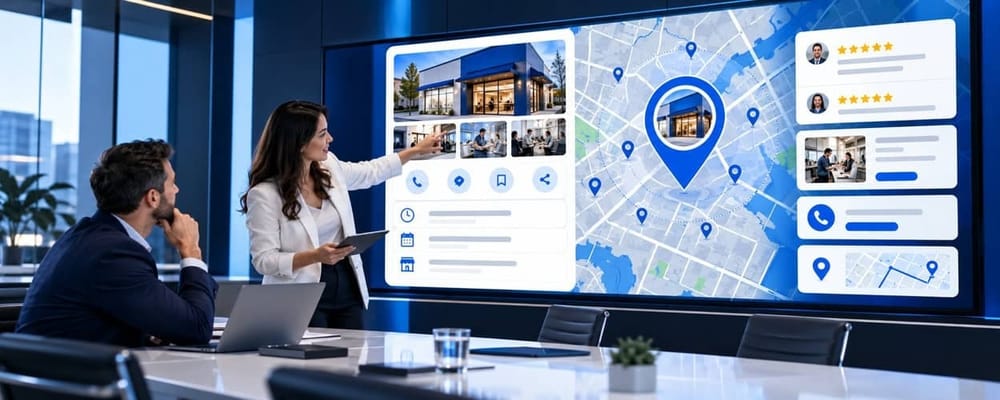
Setting up and optimizing a Google Business Profile is non-negotiable for appearing in Google Maps and the map pack. Thirty-six percent of SEOs consider Google Business Profile crucial for local rankings, and businesses with complete profiles are 70% more likely to attract visits.
Foundational steps:
- Claim and verify your listing
- Set accurate business hours, including holidays
- Confirm your physical location or service area
- Add secondary categories for additional local services
- Choose the most accurate primary business category (e.g., "Plumber," not "Home Improvement")
Profile content that matters:
- Write a detailed business description with local keywords (your city, neighborhoods, services)
- Use UTM-tagged website URLs to track clicks in analytics
- Add booking or appointment links
- List each service with a name and description
Adding photos to your Google Business Profile can enhance visibility. Upload high-resolution images of your storefront, team, vehicles, and completed projects. Update these regularly; fresh photos signal an active business. Regularly updating your Business Profile improves customer engagement across all touchpoints.
Use GBP Posts to promote seasonal offers ("Dryer vent cleaning special Austin; October 2026"), events, and new content. Posts keep your profile active and give searchers a reason to click.
Optimizing business listings can increase calls, visits, and inquiries from local customers. At Funnel Builders Expert, we connect GBP's "Website" and "Appointment" buttons directly to conversion-focused landing pages, like "Book a free roof inspection," so every click enters a structured funnel.
Building & Managing Local Citations (NAP Consistency)
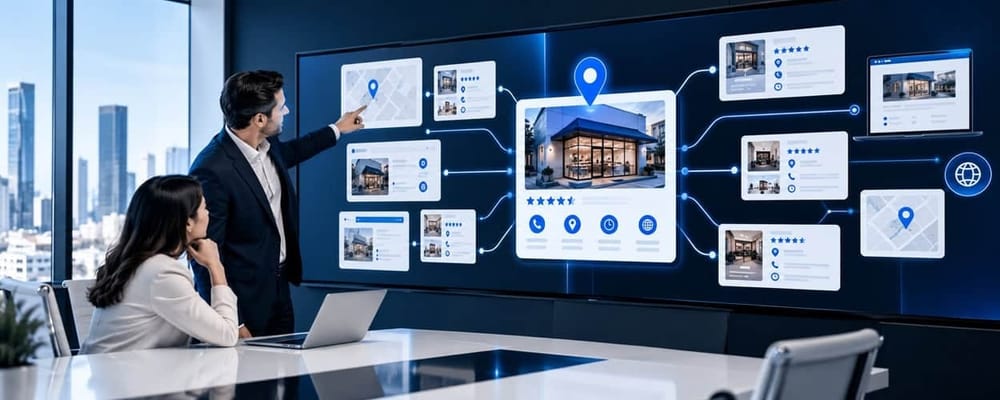
Local citations are mentions of your business's NAP (name, address and phone number) on directories, local business listings, and social profiles. They appear on platforms like Yelp, Facebook, Apple Maps, Bing Places, and local chamber websites.
Citations help Google verify business legitimacy and trustworthiness. When your business details match across 30 directories, Google treats your data as reliable. When they conflict (old phone number on Yelp, wrong suite number on Bing, outdated brand name on a chamber site), Google's confidence drops, and so do your local rankings.
Consistent NAP citations improve local search rankings. Consistent business information across directories strengthens local SEO because search engines cross-reference your data before ranking businesses in the local pack.
Here are common inconsistencies to avoid:
- Old phone numbers on directories you forgot about
- Outdated trade names or DBA variations
- Mismatched suite or unit numbers
- Closed locations still listed as active
Key citation sources vary by market. Major platforms (Google, Bing, Apple Maps, Facebook, Yelp) come first. Then industry directories: HomeAdvisor for contractors, Healthgrades for medical practices, Avvo for lawyers. Local city and regional directories round out the list.
Local citations help validate your business's legitimacy online through both structured citations (formal directory listings) and unstructured citations (mentions in local news articles, blog posts, and event recaps). At Funnel Builders Expert, we audit, clean, and synchronize citations as an early phase of every local SEO campaign, then monitor for drift or competitor manipulation quarterly. And the stakes are real: 62% of consumers avoid businesses with incorrect online information.

Encouraging & Managing Online Reviews
Online reviews on your Google Business listing are a ranking and conversion factor for both Google Map results and AI-generated "top-rated" lists. Seventeen percent of SEOs consider reviews the most important ranking factor for local packs.
Google evaluates review volume, average rating, recency, and the text content of reviews. Reviews that mention specific services ("great kitchen remodel") and location names ("our house in East Austin") feed both relevance and trust signals. Customer feedback in review text gives Google additional context about what your business does and where.
Practical ways to get more reviews without violating Google's guidelines:
- Send a post-service SMS or email with a direct Google review link
- Ask verbally after completing a job
- Set up automated review request flows from your CRM
- Print cards with QR codes at checkout or on invoices
Managing reviews improves local rankings and builds consumer trust. Responding to reviews builds trust with customers and improves rankings. Reply to positive reviews with a thank-you that references the project. Address negative reviews within 24 to 72 hours with empathy and a path to resolution. Responding to reviews on your profile builds customer trust over time.
Beyond Google, consider Facebook, Yelp, and industry-specific platforms. A multi-platform online reputation reinforces your prominence signal. At Funnel Builders Expert, we set up automated review request sequences and centralize monitoring so owners see every review across platforms in one dashboard.
On-Page SEO for Local Landing Pages & Service Areas
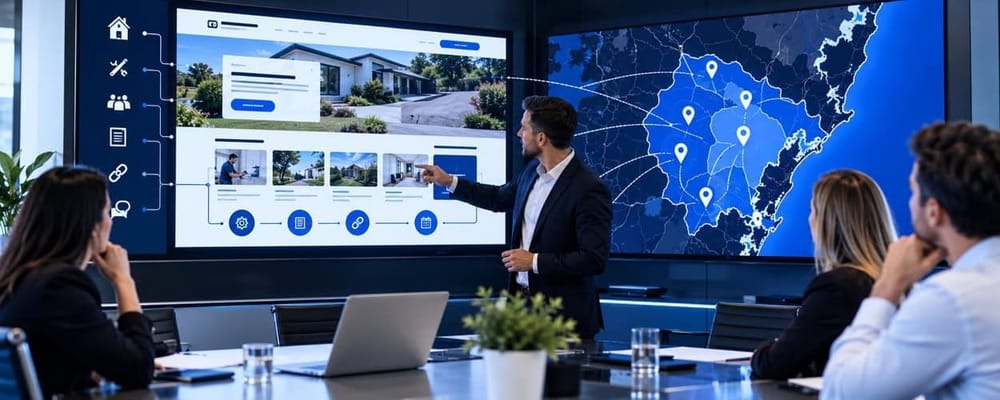
On page SEO in a local context means optimizing individual pages on your own website so they rank for city + service local keywords and support local pack visibility. Optimizing websites for local keywords improves local search visibility for every location you serve.
Create focused service pages instead of one generic "Services" page. "Kitchen Remodeling in Dallas" and "Bathroom Renovation in Plano" each target a distinct local query. Add location pages for key suburbs where you serve nearby customers.
Where to place local keywords:
- Title tags and meta descriptions
- Internal link anchor text
- Image alt text
- Body copy (naturally, not stuffed)
- H1 and H2 headings
Include your business name, address and phone number in the site footer and on the Contact page. Embed a Google Map to reinforce your business location for both users and search engines.
Add localized content: neighborhood names, local case studies, customer testimonials mentioning the city, and before-and-after project images. These details prove you actually operate in that local area.
At Funnel Builders Expert, we combine these pages with high-converting funnel designs: clear calls to action, lead magnets ("Free estimate"), booking forms, and automated follow-up sequences.

Local Keyword Research & Content Strategy
Local keyword research identifies terms customers use for services in your area. The combinations follow a pattern: service + city ("emergency electrician Miami"), service + "near me," and neighborhood-based queries ("east Austin plumber").
Google Keyword Planner helps find local search volumes and competition levels for these terms. Pair it with Google Search Console data (which shows queries your site already appears for), autocomplete suggestions, and "People Also Ask" boxes. A keyword research tool like these reveals which queries have enough volume to justify a dedicated page.
Group keywords into themes. Each theme gets its own page: one group per service-area combination. Don't try to rank a single page for "plumber Chicago," "plumber Naperville," and "plumber Evanston." That dilutes relevance for all three.
Content ideas that build local authority:
- Seasonal maintenance checklists ("Spring HVAC tune-up checklist for Phoenix homeowners; 2026")
- Case studies with real project details and neighborhood names
- FAQs targeting local regulations, permits, or climate issues
- Local event sponsorship recaps
Write for humans first, but format so search engines and AI can parse it: clear headings, concise paragraphs, structured FAQs. Publishing locally relevant content can earn valuable backlinks and enhance local SEO when local news or community sites reference your guides.
At Funnel Builders Expert, we pair local SEO content with nurture campaigns (email sequences, remarketing ads) to turn organic traffic into booked calls and consultations.

Local Backlinks, PR & Community Signals
Local backlinks are links from other locally relevant websites to yours: chambers of commerce, local news outlets, event sponsors, partner businesses, and local bloggers. Backlinks are a strong ranking signal in local SEO, and 31% of SEOs deem links the most important signal for rankings.
Local backlinks from respected local organizations enhance business prominence because they tell Google that trusted entities in your community vouch for your business. Getting links from relevant local sites boosts local SEO rankings more than generic directory links from unrelated regions.
Concrete acquisition ideas:
- Sponsor a local youth sports team (league websites link to sponsors)
- Join your local chamber of commerce and trade associations
- Publish data-driven local reports ("Annual roofing damage report for Chicago suburbs; 2026")
- Contribute expert quotes to local journalists covering your industry
- Collaborate with nearby businesses on joint offers or events
Quality matters more than quantity. A link from your city's newspaper or a local government site carries more weight than 50 low-authority directory submissions.
At Funnel Builders Expert, we identify local PR opportunities and route the resulting traffic to dedicated landing pages with a strong offer, so a news feature doesn't just build links; it generates leads.

Local SEO Tools & Tracking Your Results
Local SEO requires ongoing measurement and adjustment of strategies. Setup without tracking is guessing.
Key categories of local SEO tools:
Tool Type
Examples
What It Tracks
Profile management
Google Business Profile Manager
Calls, direction requests, profile views
Search analytics
Google Search Console (now with generative-AI report added June 2026)
Queries, clicks, AI Overview appearances
Web analytics
Google Analytics 4
Traffic, conversions, revenue
Local rank tracking
BrightLocal, Local Falcon
Map pack rankings by ZIP/grid
Citation management
Whitespark, BrightLocal
NAP consistency, new/lost citations
Review monitoring
GatherUp, Birdeye
New reviews, sentiment, response time
Geo-grid rank trackers are especially useful. They show where your business appears in Google Map results across different parts of a city. Two users five miles apart may see completely different local pack results; grid tracking reveals those gaps.
Set up monthly reports tracking: calls and messages from GBP, driving direction requests, organic traffic to location pages, form and booking conversions, new reviews, and map pack rankings. Google Search Console is a free tool that every local business owner should connect.
At Funnel Builders Expert, we build reporting into the client acquisition system so owners see booked appointments and closed revenue from local SEO, not just ranking positions. Data feeds iteration: double down on pages and locations that convert, and improve or consolidate those that don't.

From Visibility to Revenue: Integrating Local SEO with Funnels & Automation
Local SEO generates visibility. Funnels convert that visibility into revenue. Without a conversion system behind your local rankings, you're collecting impressions instead of customers.
Traffic from local search (map pack, local pack, organic results) should flow into a structured path: landing page → lead capture → automated nurture → booking → reminder sequences. A roofing company using local SEO to drive clicks to a "Free roof inspection" landing page captures an email and phone number, triggers an SMS confirmation, and sends a reminder the morning of the appointment. A local coach using city-based SEO pages feeds visitors into a discovery call booking funnel.
Automation ensures every call, form submission, and missed call from local search gets followed up. CRM workflows send a text within two minutes of a missed call. Email sequences nurture leads who aren't ready to book today. Pipeline management tracks each lead from first click to closed sale.
The full journey looks like this: Search → Click (GBP or organic) → Landing Page → Form or Call → Automated Nurture → Booked Appointment → Service Delivered → Review Request → Review Boosts Local SEO → More Customers.
At Funnel Builders Expert, our core value is building these complete systems so owners don't manage separate vendors for local SEO, Google Ads, Meta Ads, and funnel tech.

Common Local SEO Mistakes (And How to Avoid Them)
Unclaimed or incomplete Google Business Profile. If you haven't claimed your GBP, Google auto-generates one with whatever data it finds. Competitors or customers can suggest edits. Claim and verify your profile this week.
Inconsistent NAP data. Three directories show your old phone number. Two show Suite 200; one says Suite 2. Google can't confirm which is correct, so it trusts none of them. Maintain a single master NAP document and audit citations quarterly.
Duplicate listings. Multiple GBP listings for the same business location confuse Google and split your review signals. Merge or suppress duplicates.
Fake or incentivized reviews. Offering discounts for positive reviews violates Google's guidelines and risks profile suspension. Ask for honest customer feedback; let service quality drive the rating.
Thin or duplicate location pages. Copying the same page text for ten cities with only the city name swapped provides no local value. Each location page needs unique content: local case studies, neighborhood references, area-specific FAQs.
Ignoring mobile experience. Local searches frequently occur on mobile devices. If your location pages load slowly or forms are hard to tap, you lose the lead.
AI content with surface-level local keywords. Generating 50 city pages with AI and inserting "plumber in [city]" without real local detail produces thin content that doesn't rank and doesn't convert.
Many of these issues stem from fragmented marketing efforts. A systemized approach, where GBP, citations, content, and funnels operate as one connected system, prevents most of them.

Next Steps: Implementing Local SEO with Funnel Builders Expert
Local SEO is no longer "getting on the map." It's building a measurable system that turns local search visibility into predictable leads and sales. Start this week: search your key services + city, check your Google Business Profile for completeness, and read your most recent reviews.
If you'd rather have a partner handle the technical details, Funnel Builders Expert runs a straightforward process: discovery call, local SEO and funnel audit, a roadmap for Google Map and organic growth, then full implementation of funnels, automation, and tracking. Book a strategy session or request a Local SEO and funnel audit at Funnel Builders Expert to see what your local area looks like from a search perspective.
Google's local algorithm and AI-driven local search will keep changing. The businesses that build complete acquisition systems now will own their local community for the next three to five years. The ones that wait will keep paying more for ads to reach the same customers who could have found them for free.

Website
Ecommerce Website
Blog Website
Website Design
Web Management
WordPress Website
SEO - AIO
AI Optimization
Local SEO
On-Off Page
SEO Audits
Technical SEO
Paid Advertising
Display Ads
Meta Ads
Google Ads
Linkedin Ads
TikTok Ads
CRM Automation
CRM Setup
Email Marketing
Lead Management
Pipeline Automation
SMS Marketing
Disclaimer: This site is not affiliated with or endorsed by Google or Meta™. All content is for educational purposes only and does not guarantee results or earnings. Your success depends on your own efforts, experience, and circumstances. Financial examples are illustrative, not promises. Always seek professional advice before making business or financial decisions. By using this site, you agree we are not liable for outcomes based on this information.
2026 © Funnels Builders Expert, a Sydney Website Design Agency product - Privacy Policy - Terms & Conditions