
Email Sequence: How To Turn Cold Leads Into Clients On Autopilot
Funnel Builders Expert builds complete sales funnels, marketing funnels, and automation systems for service-based businesses that want more qualified leads, more booked calls, and more paying customers without getting buried in technical setup.
Introduction: Why Email Sequences Still Print Money In 2026
Email has been a revenue driver since 1978, when the first commercial email was sent to 400 addresses and generated $13 million in sales. Nearly five decades later, the channel hasn't slowed down. Email marketing can yield an ROI of $36–$42 for every dollar spent, a return that consistently outperforms most social media campaigns and many paid advertising channels. With email marketing projected to reach 4.97 billion users by 2028, the addressable market is only growing.
For coaches, consultants, course creators, and local service businesses doing €10,000+ per month, email marketing is more affordable than ads, SEO, or social media marketing when you factor in the long-term compounding effect. Email marketing costs significantly less than traditional advertising channels because a well-built email sequence keeps working around the clock, converting leads you already paid to acquire.
At Funnel Builders Expert, we build automated email sequences inside complete client acquisition systems that combine sales funnels, Google Ads, Meta Ads, Local SEO, CRM, and marketing automation. The email sequence is the connective tissue that turns ad clicks into booked calls, and booked calls into paying clients, without you manually chasing every lead.
This article covers the major types of email sequences, the triggers that power them, how to structure individual emails, deliverability best practices, and how to plug sequences into a broader email marketing campaign. Whether you run a coaching business, a roofing company, or a consulting practice, you will walk away with a concrete system you can implement this month.
What Is An Email Sequence? (And How It Differs From One-Off Campaigns)
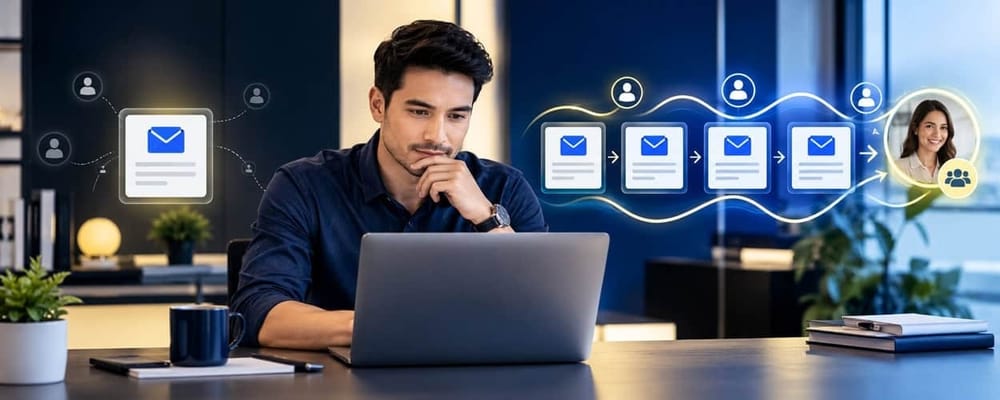
An email sequence is a series of automated marketing messages sent to subscribers in a defined order. Email sequences are triggered by actions or time-based events, such as a lead magnet download, a webinar registration, a purchase, or even the absence of an action like a missed appointment.
Unlike a one-off email marketing campaign, which is a single broadcast sent to a list segment at one point in time, an email sequence runs continuously in the background. Every person who meets the trigger condition enters the flow and receives the same strategic series of emails, regardless of when they opt in. Automation allows email sequences to nurture leads 24/7 without manual intervention.
Email sequences can be used for lead nurturing and onboarding, but they also cover conversion, retention, upselling, and re-engagement. Each stage of the customer journey gets its own sequence: attract leads with a welcome flow, educate them with a nurture series, convert them with a sales push, impress them during onboarding, then multiply revenue with upsell and referral flows.
Here is a concrete example. A business coach runs Facebook Ads promoting a free quiz. After someone completes the quiz, they enter a 7-day "New Lead Nurture" sequence: Day 0 delivers the quiz results, Day 2 shares a story about a client transformation, Day 4 provides a quick-win framework, Day 6 handles common objections, and Day 8 invites them to book a strategy call. That sequence runs for every single lead, automatically, whether the coach is sleeping, on vacation, or recording a podcast.
A one-off campaign might promote the same strategy call, but it goes out once, to everyone, with no follow-up. The sequence approach meets leads at the right time with the right message, and that difference compounds over months.

Email Sequences vs Drip Campaigns: Not Quite The Same
A drip campaign is a basic, time-based series of emails. Email 1 fires on Day 1, Email 2 on Day 3, Email 3 on Day 5, and so on, regardless of whether the subscriber opened, clicked, or took any action. Drip campaigns are straightforward to build but limited in intelligence.
Modern email sequences add behavior-based branching. If a subscriber clicks a link about pricing but does not visit the checkout page, they receive an objection-handling email the next day. If someone clicks "Book A Call" but never schedules, they automatically move into a separate reminder mini-sequence. If a subscriber never opens Email 2, they receive a resend with a different email subject line 48 hours later.
The practical differences are significant. In terms of complexity, drip campaigns require minimal setup while behavior-based sequences demand tagging, conditional logic, and multiple branching paths. In terms of personalization, drip campaigns feel templated while sequences feel like a direct line of conversation. In terms of ROI, behavior-segmented sequences can achieve click-through rates around 12.8% compared to average list click-through rates of 2–3%.
Segmented campaigns can increase email revenue by up to 760%, which is why the extra effort of building behavior-led sequences pays off dramatically over static drips. For any business spending real money on ads, the sequence approach turns more of those paid leads into revenue.
Core Advantages Of Email Sequences For Coaches & Local Service Businesses
Email sequences scale what used to be done manually: follow-up calls, relationship building, onboarding checklists. Instead of a marketing manager or assistant chasing discovery calls one by one, sequences handle trust-building automatically.
Consider an HVAC company that generates leads through Google Ads. Without a follow-up sequence, the office staff must call each lead multiple times. With a well-built sales sequence including reminders, proof, and FAQs, quote requests convert into booked jobs at a higher rate, with less staff time. Or take a fitness coach who pairs Meta Ads with a nurture sequence: new lead magnet subscribers move automatically toward booking a consultation, even during off-season months, creating predictable lead flow.
Personalization beyond names increases relevance in email sequences, leading to stronger engagement. Email personalization can lead to a 20% increase in sales when done right, and email marketing can increase revenue by up to 760% through segmentation. For a marketing funnel built for a flooring company, that might mean segmenting leads by project type (hardwood vs. tile) and tailoring nurture content accordingly.
The flexibility is what makes sequences so valuable. A dental clinic uses them to re-engage after an initial quote and follow up for appointment booking. A course creator uses onboarding sequences for cohort-based programs. A home improvement business uses quote-request abandonment flows. Every model benefits from cost effective email marketing that compounds over time.
Key Types Of Email Sequences (And When To Use Each)
Before diving into each type in detail, here is a brief overview of the main sequence families and where they fit in your funnel.
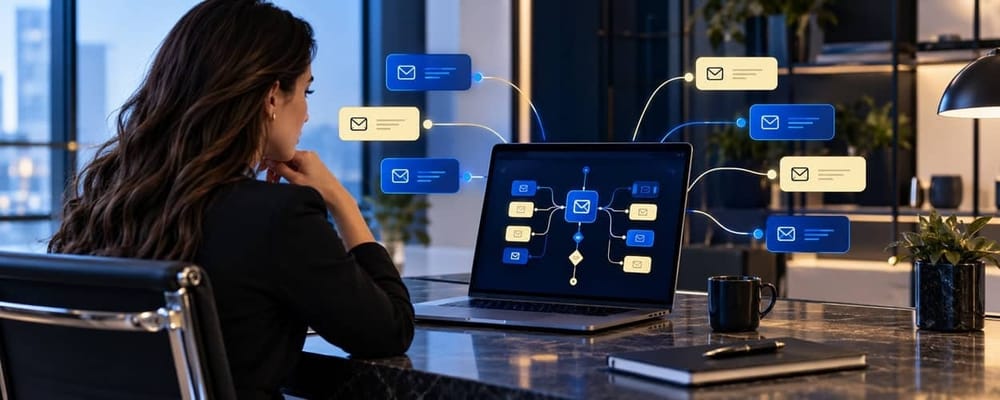
Welcome emails introduce new subscribers to your brand and set the tone for the relationship. Lead nurturing emails guide prospects toward making purchases by delivering education and proof. Promotional emails announce special offers and new products during active sales windows. Conversion and sales sequences push warm leads toward a decision. Onboarding sequences deliver a premium client experience after purchase. Re-engagement emails revive interest from inactive subscribers who have gone quiet. Upsell and cross-sell sequences expand customer value after the core promise is delivered. Feedback and referral sequences generate social proof and word-of-mouth. Event and webinar sequences handle registration, show-up, and post-event follow-up. Newsletters share updates and valuable content regularly to keep your list engaged between sequences.
Most high-performing email marketing strategies combine four to seven of these sequences into one cohesive lifecycle system. They map directly to funnel stages: attract, capture, nurture, convert, impress, and multiply.
Welcome Email Sequence: Turning New Leads Into Warm Prospects
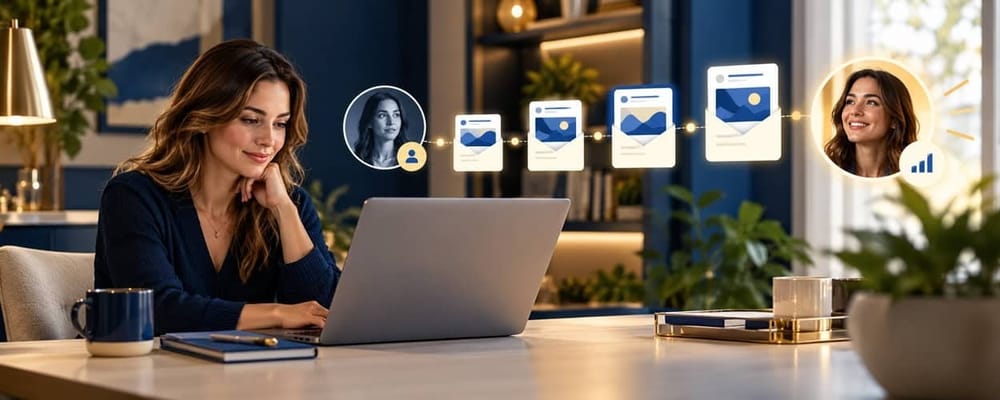
A welcome email sequence should trigger immediately after opt-in, whether that is a lead magnet download, a quiz completion, a webinar registration, or a contact form submission. Welcome campaigns create engagement when someone joins an email list, and the timing of that first email sets expectations for everything that follows.
For a coach or local service provider, a typical 3–5 email welcome flow over 5–7 days looks like this. On Day 0, deliver the promised resource and set expectations. Tell new subscribers what they will receive, how often, and why it matters. Keep the tone warm and direct.
On Day 2, share your brand story or origin. Explain why you do what you do. A marketing consultant might describe the moment they realized most businesses waste money on ads because they have no follow-up system. A pool builder's funnel might share a before-and-after project that changed a family's backyard.
On Day 4, deliver a quick win. One actionable insight the reader can implement right now. This proves value without asking for anything in return. On Day 5, share a case study or client result. Show a real transformation with specifics. On Day 7, offer a soft call to action: book a discovery call, join a community, or reply with their biggest challenge.
Each email in a sequence should have one purpose and one main call-to-action. Do not scatter links to your blog, your podcast, your social media, and your booking page in the same message. One email, one job.

Lead Nurturing Email Sequence: Educate, Pre-Sell, And Build Trust
A lead nurturing email sequence runs over one to three weeks after the welcome flow, before any major sales push. The goal is to educate potential customers, reduce friction, build familiarity, and pre-sell your method or approach. Email sequences can include a mix of educational content and promotions to maintain engagement without burning out your list.
For a business coach, this might look like: Day 1 "The Big Vision" paints a picture of what is possible. Day 3 "Hidden Leaks In Your Funnel" addresses a specific pain point with a teaching framework. Day 5 features a client case study showing growth from €8k to €50k per month. Day 7 tackles a common myth or misconception about scaling. Day 10 extends a soft invitation to book a free strategy session or attend a live workshop.
Effective email sequences rely on dynamic segmentation of audience. If a subscriber clicks a link about client retention in Day 3, tag them. In later emails, pivot content to retention-specific stories and case studies. This kind of targeted messages approach dramatically improves relevance and response rates. Personalized emails can improve open rates by 26%, and using the recipient's name in emails boosts engagement significantly, but true personalization goes far beyond first names.
Plan your nurture content to cover pain points, myths, case studies, quick wins, and soft invitations. By the time your sales sequence fires, the subscriber should already believe in your approach and trust your expertise. The target audience has been warmed and segmented, making the conversion conversation far easier.

Conversion & Sales Sequences: From Nurtured Lead To Paying Client
Sales sequences aim to move nurtured leads into action: booking a call, enrolling in a program, or requesting a quote. These sequences typically fire when leads show high intent, such as visiting a pricing page, clicking a sales link, or attending a webinar. They are shorter and more urgent, usually five to nine emails over five to seven days.
A typical structure for a high-ticket coaching program might include an email acknowledging interest with a personal story, followed by a social proof email with two or three testimonials, then an FAQ and objection-handling email, a "behind the scenes" look at what happens inside the program, a 48-hour warning, and a final-call email on closing day. For cohort or seasonal programs, the timeline is fixed: open cart Monday, close cart Sunday night. Dynamic content in emails enhances user experience and relevance across these touchpoints.
For local service businesses, the same principles apply with different specifics. A roofing company receiving estimate requests could run a sales sequence that starts with an immediate estimate follow-up, then sends project photos and testimonials the next day, counters objections around price and timing on Day 3, offers a guarantee or incentive on Day 4, and closes with a final reminder. Using the recipient's name in emails boosts engagement significantly even in service-based contexts.
Effective email marketing campaigns in the sales phase do not rely on pressure alone. They combine proof, clarity, and urgency in a way that makes the decision feel obvious rather than forced.
Abandoned Cart & Abandoned Booking Sequences
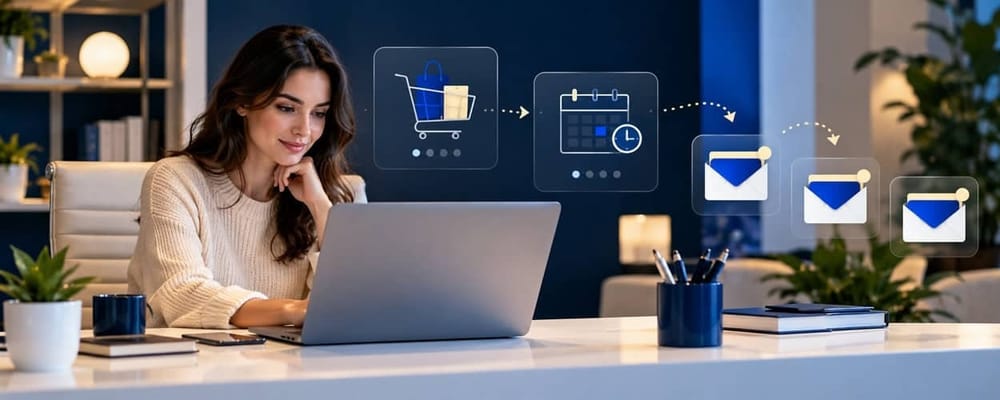
Abandoned cart recovery emails target online shoppers who left items in their cart, but the same principle applies to service businesses. An "abandoned booking" sequence triggers when someone starts scheduling a call or filling out a quote request but does not finish.
A typical flow runs two to four emails over 24 to 72 hours. The first email, sent within a few hours, is a friendly reminder: "You started booking your free strategy session but didn't finish. Here's the link to complete it." The second email, sent 24 hours later, addresses possible hesitations: "Not sure if this is right for you? Here's what past clients said after their first call." The third email, at 48 hours, adds social proof or a small incentive. The fourth, if used, is a breakup message: "We'll remove your reserved spot unless you confirm by tomorrow."
Businesses that implement these flows typically recover 10–25% of lost opportunities, which directly improves lead utilization and lowers cost per acquisition. For any business running paid traffic through Google Ads or Meta Ads, this recovery flow is one of the fastest wins available. Copy ideas like "Still thinking it over?" or "Your estimate request is almost done" keep the tone helpful rather than pushy.
Onboarding Email Sequence: Delivering A 5‑Star Client Experience
Once someone becomes a client, an onboarding sequence ensures clarity, momentum, and reduced buyer's remorse. This applies equally to online programs and local service clients who have signed a contract or paid a deposit.
A typical four to six email onboarding flow over the first 7–14 days starts with an immediate welcome message after purchase. This email confirms the transaction, provides access details, and outlines exactly what happens next. On Day 2 or 3, the second email explains how to get the most from the program or service, including how to prepare, what materials to review, and how to communicate with the team.
By Day 5 to 7, a check-in email asks how things are going. Are they stuck? Do they have questions? For local service businesses, this might include appointment preparation details, site access instructions, or scheduling confirmations. Around Day 10 to 14, an email sets expectations for the coming weeks: deliverables timeline, upcoming sessions, community access, or project milestones.
The benefits are tangible. Onboarding sequences reduce no-shows, cancellations, refund requests, and negative reviews. They also increase customer retention and encourage customer loyalty by making new customers feel supported from the first interaction.
Re-Engagement & Win-Back Sequences For "Silent" Subscribers
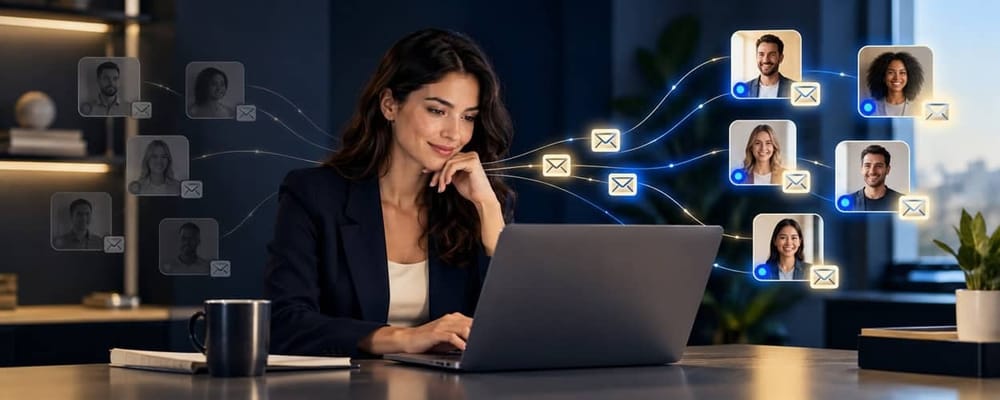
Inactive subscribers, those who have not opened or clicked any emails in 60 to 90 days, damage your sender reputation and hurt email deliverability across your entire list. Re-engagement emails are designed to either revive these contacts or clean them from your list.
A three to five email re-engagement email sequence works like this. The first email revisits value: "I have been working on something new, and I think you will find it useful." The second offers updated preference options: "What topics do you actually want to hear about?" The third is a direct "last chance" notice: "Should we stop emailing you?" Concrete subject line examples include "Still want funnel tips?" or "We are removing inactive subscribers this week."
Subscribers who respond or click get re-tagged as active and re-enter your nurture flows. Those who remain silent should be suppressed or removed. Regularly cleaning your email list improves deliverability and engagement rates. Regularly cleaning your email list enhances deliverability and engagement, and maintaining a clean email list can improve deliverability by reducing bounce rates. This hygiene step protects your sender reputation and ensures future campaigns land in inboxes, not spam folders.
Upsell, Cross-Sell, And Ascension Sequences
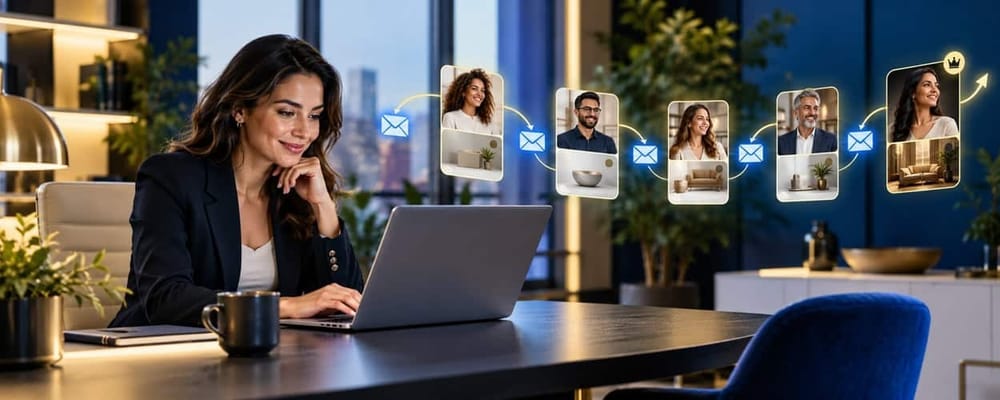
Upselling means offering a higher-ticket or expanded version of what the client already bought. Cross-selling means offering a complementary service or product. Timing is everything: start these sequences only after your core promise is delivered, not during active service delivery.
For a home improvement company, the flow might look like this. After a roof replacement is completed and the client is satisfied, send a three-email upsell sequence over 10 days promoting an annual maintenance plan. Email one explains the value of preventive maintenance. Email two shares a case where maintenance caught a small issue before it became a €5,000 repair. Email three offers a limited-time price for signing up within the week.
For a coach, the pattern is similar. After a 12-week program wraps up and existing customers have achieved results, cross-sell a group mastermind or implementation retainer. Send the sequence one to two weeks before the program ends so momentum carries forward naturally. These sequences increase average client value and extend customer relationships beyond the initial engagement, encouraging customer loyalty over time.
Feedback, Review, And Referral Sequences
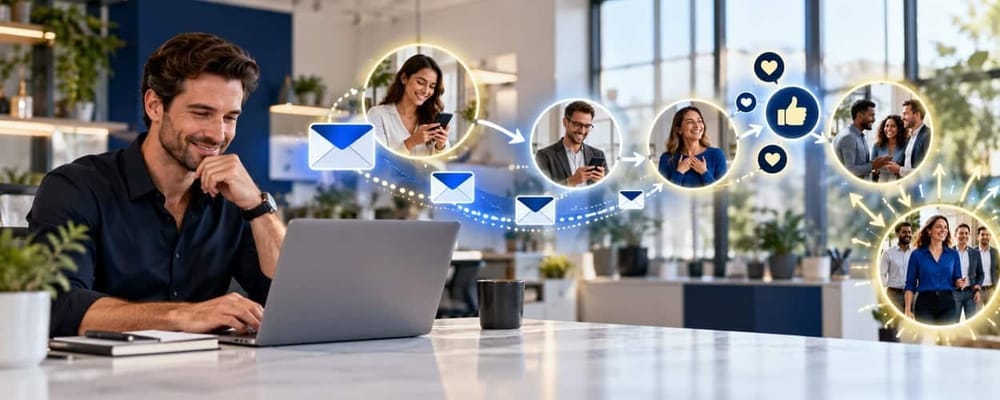
After a positive milestone, whether a completed project, a coaching result, or a service delivery, a feedback sequence amplifies social proof and drives word-of-mouth growth. The timing matters: request reviews within 48 to 72 hours of a positive outcome, while the experience is still fresh.
A two to four email flow works well. The first email asks for private feedback: "How was your experience working with us? What could we improve?" The second, sent a day or two later, requests a public review on Google or Facebook. The third offers a referral incentive, such as a bonus session, a gift card, or a discount on future services.
For local service businesses, more Google reviews directly fuel Local SEO rankings and build trust with potential customers searching for services in their area. For coaches and consultants, testimonials collected through these sequences become social proof for landing pages and sales funnels. These review and referral sequences turn satisfied clients into a marketing channel that costs nothing beyond the initial setup.
Event, Challenge, And Webinar Sequences
Live events, webinars, workshops, and five-day challenges are powerful lead generation tools. The email sequences surrounding them handle three phases: registration confirmation, show-up optimization, and post-event follow-up.
Pre-event reminders for a webinar scheduled on 14 October 2026 might include: a confirmation email immediately after registration, a "what to expect" value teaser five days before, a "live tomorrow" reminder, and a "we're live now" email at the start time. These show-up sequences can double attendance rates compared to a single confirmation email.
Post-event follow-up is where the revenue happens. Attendees who watched live receive the replay link plus a direct offer. Those who registered but did not attend receive the replay with an urgency-driven message. No-shows get a softer sequence with the replay and an invitation to book a one-on-one call instead. Over the following week, four to seven follow-up marketing emails deliver targeted messages with testimonials, FAQ handling, and deadline reminders.
Event sequences integrate powerfully with other marketing channels. Run retargeting ads on social media to webinar registrants who did not attend. Use SMS reminders alongside email for higher show-up rates. The multi-channel approach ensures your marketing efforts are not siloed.

Planning Your Email Sequence Strategy: Goals, Audience, And Offer
Start with the end in mind. Define one primary goal per sequence using SMART criteria. For example: "Book 30 qualified discovery calls per month from new lead magnet subscribers" or "Reactivate 500 dormant leads generating €5,000 additional revenue per quarter." Without a specific goal, you cannot measure success.
Map sequences to your target audience segments. New leads from Google Ads need different messaging than a cold list from 2021 or repeat buyers exploring your next offer. Each segment enters a different sequence or a different branch within the same sequence.
Align your offer with the right frequency and intensity. A premium consulting offer at €5,000+ requires more trust-building, more proof, and less aggressive scarcity than a €97 digital course. High-ticket leads get longer nurture windows with more case studies. Low-ticket prospects can handle a faster, more direct sales push. Costs for email marketing platforms start around $20–$50 per month, making even small businesses able to afford this form of digital marketing. However, email marketing costs can rise with subscriber count and email volume, so plan your list growth alongside your budget.

Triggers, Timing, And Logic: How Email Automation Actually Works
Every email sequence begins with a trigger. Common triggers in most email marketing services include form submission, tag added, purchase created, page visited, webinar attended, or pipeline stage change. The trigger is the event that starts the clock.
Logic is what makes sequences intelligent. If/then branches route subscribers down different paths based on behavior. Delay steps create pauses between emails. "Wait until" events hold the sequence until a condition is met, such as waiting until an appointment is completed before sending a post-consult follow-up.
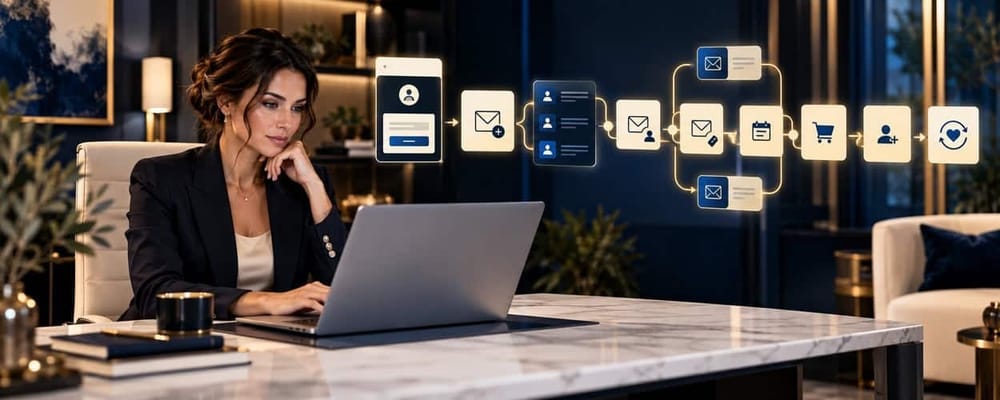
A real-world flow that Funnel Builders Expert would build looks like this: a Meta Ads lead form captures a prospect, the CRM assigns a "new lead" tag, the welcome sequence fires immediately, and if the lead clicks a booking link but does not schedule, a reminder mini-sequence triggers automatically. Once the appointment is booked, the sequence pauses and picks back up post-call with an onboarding or sales close flow. This kind of marketing automation workflow eliminates manual handoffs.
For send timing, B2B audiences typically respond best to emails sent on weekdays between 8 and 11 AM in the recipient's time zone. Consumer and local service businesses often see strong engagement on evenings and weekends. Spacing between emails in nurture sequences works best at every two to three days. Sales and abandoned flows use tighter windows of 12 to 24 hours. Do not send everything at once; let the rhythm feel natural.

Structuring Individual Emails: Subject Lines, Copy, And CTAs
Email sequences benefit from clear and compelling subject lines. The average email open rate across industries is 35%, and the average open rate for branded emails is 35%, so your subject line is competing for attention in a crowded inbox. Prioritize clarity and relevance over cleverness. Avoid spam triggers like "GUARANTEED RESULTS" or "ACT NOW!!!" that route messages straight into spam filters.
The body of each email should follow a simple structure: hook the reader in the first sentence, show empathy for their situation, deliver value or relevant content, provide proof (a quick testimonial or data point), and close with one clear call to action. "Book your 15-minute discovery call," "Claim your free funnel audit," or "Confirm your appointment" are all examples of direct, single-purpose CTAs.
Keep marketing emails scannable. Short paragraphs of two to three sentences work best. Use subheadings within longer emails. Every email must be fully responsive on mobile devices, since the majority of email opens now happen on phones. A wall of text on a small screen is an instant delete.
Tone should match your brand. Coaches and consultants benefit from a personal, conversational voice. Local service providers earn trust through authority, clarity, and local relevance. Regardless of voice, avoid jargon that your reader would not use in everyday conversation. Write like you are talking to a smart friend who happens to need your help.

Deliverability Fundamentals: Keeping Your Sequences Out Of Spam
Email deliverability refers to the ability to deliver an email to the inbox. Good email deliverability ensures emails reach subscribers' inboxes, not spam folders. For automated sequences that send daily, deliverability problems compound quickly because every new lead entering the flow hits the same issues.
Authentication is the first line of defense. SPF, DKIM, and DMARC are protocols that verify your emails are actually coming from your domain. A 2025 deliverability report found that over 66% of senders use SPF and DKIM, but many have misaligned configurations that cause failures. If you are setting up a new sending domain, warm it up gradually by sending to small, highly engaged segments first.
List hygiene is non-negotiable. Remove hard bounces promptly. Suppress inactive subscribers after running a re-engagement sequence. Honor unsubscribes instantly. Never purchase email lists; unsolicited emails destroy your sender reputation and violate regulations like the CAN-SPAM Act, GDPR, and CASL. Double opt-in helps eliminate misspelled email addresses and spam traps, keeping your list clean from the start. Double opt-in processes help eliminate misspelled email addresses, ensuring every subscriber on your list actually wants to be there.
On the content side, avoid spammy phrases, maintain a healthy text-to-image ratio, include a clear unsubscribe link, and use an accurate sender name and email address. Internet service providers track these signals. Consistent sending schedules help inbox providers anticipate your traffic and treat it favorably.

Measurement, Testing, And Optimizing Your Email Sequences
Tracking conversions and engagement trends provides insights for improving email sequences. The key metrics to monitor across every sequence are open rate (measuring subject line effectiveness and deliverability), click-through rates (measuring engagement by tracking link clicks in emails), reply rate (especially for personal, conversation-style sequences), conversion rate (booked calls, purchases, quote requests), and the unsubscribe rate, which indicates how many recipients opt out after receiving emails. A rising spam complaint rate is a red flag that demands immediate attention.
A/B testing can optimize email campaigns for better performance. Start with one variable at a time: test two subject lines against each other, then test CTA wording, then test send times. Many email marketing platforms make this straightforward. For example, a coaching business tested two variations of its nurture sequence: one email removed industry jargon, another added a stronger social proof story. The result was a conversion-to-call rate increase from 1.5% to 3%, effectively doubling booked consultations without spending more on ads.
Continuous testing of performance metrics is crucial for optimizing email sequences. Review your email marketing metrics every 30 to 90 days. Identify bottlenecks: low opens suggest subject line problems, low clicks suggest content or CTA issues, low conversions suggest offer or timing misalignment. Optimize in loops rather than rebuilding from scratch. Segmented campaigns can increase email revenue by up to 760%, so even small improvements in segmentation and targeting yield outsized returns.
Integrating Email Sequences With Your Other Marketing Channels
Email does not operate in isolation. Its real power emerges when integrated with your other marketing channels. Email marketing can deliver an ROI of $36 for every dollar spent, but that number climbs when sequences work alongside paid traffic, organic search, and social media.
A practical cross-channel workflow looks like this: run an Instagram or Facebook campaign promoting a lead magnet. Leads land on a landing page, opt in, and enter a welcome and nurture email sequence. Meanwhile, the same leads are added to a custom audience on Meta for retargeting ads. Subscribers who click but do not convert receive both a follow-up email and a retargeting ad reinforcing the same message across channels.
For local service businesses, leads from SEO for lead generation efforts, Google My Business inquiries, or Google Ads lead forms feed into the same CRM and trigger the same automated sequences. This direct audience access ensures no lead falls through the cracks regardless of where they found you.
A unified CRM plus email marketing automation platform lets all channels share data. Email engagement informs ad targeting. Ad click behavior informs email segmentation. The result is a marketing strategy where every channel reinforces the others, improving personalization and reducing wasted spend across all marketing efforts.
Common Mistakes In Email Sequences (And How To Avoid Them)
The most common mistake is sending too many sales-heavy commercial messages before trust is built. If a subscriber opts in on Monday and receives three promotional emails by Wednesday, they are likely to unsubscribe or mark you as spam. Build value first, sell second.
Inconsistent cadence is another problem. Email subscribers who hear from you daily for a week and then not at all for a month lose trust and forget who you are. Plan your sending schedule and stick to it. Each email should have a clear, singular CTA. Multiple calls to action in one email dilute the response.
Ignoring segmentation is leaving money on the table. Blasting the same discount to your entire list when only a subset showed interest in pricing is wasteful. Targeted emails based on lifecycle stage and behavior outperform blanket sends every time.
Compliance mistakes are serious. Emailing without clear consent, hiding unsubscribe links, failing to include a physical address, or making unsupported claims can violate the CAN-SPAM Act, GDPR, and CASL. These errors risk both legal exposure and deliverability damage. Treat compliance as a foundation, not an afterthought.
Finally, many email marketers never test or review their email marketing performance. They build a sequence once and assume it works forever. Without regular measurement, you cannot know what is working and what is silently losing you money in future campaigns.
How Funnel Builders Expert Designs High-Converting Email Sequences
At Funnel Builders Expert, designing email sequences starts with strategy, not templates. The process begins with auditing existing marketing emails and funnels, mapping the customer journey from first touch to repeat purchase, identifying drop-off points, and then building sequences that close those gaps. If you are wondering what does a funnel builder do, this is the core of it: designing systems where every stage connects and no lead is wasted.
Our typical client profile, coaches, consultants, course creators, and local service businesses already at €10,000+ per month, needs one-to-many systems rather than manual follow-up. They have validated offers and running ads but lack the automated infrastructure to convert leads consistently.
Sequences tie into broader client acquisition systems using sales funnels, CRM, conversion optimization, Google Ads, Meta Ads, and Local SEO. A local plumbing contractor, for example, was losing most estimate requests due to zero follow-up. Implementing an abandoned booking sequence plus a sales follow-up flow increased estimate-to-job conversion by 30%. In another case, a consultant running ads and generating 100 leads per month had low booked-call rates. Adding a welcome, nurture, and sales sequence doubled bookings and reduced cost per booked consult by 40%.
These are not isolated email marketing tools. They are engineered revenue systems where every email, ad, and landing page works together. That is the difference between an email marketing service and a complete client acquisition system.
Next Steps: Implementing Your First (Or Next) Email Sequence
Pick one sequence as your starting point. For most businesses, a welcome or lead nurture sequence delivers the fastest ROI. Define a specific goal: how many booked calls, enrollments, or quote requests you want per month. Identify the audience segment you are targeting. Draft five to seven emails mapping the journey from resource delivery through value and proof to a clear offer.
Choose your triggers and logic. Build the flow in your email service provider or CRM. Test individual emails and subject lines before going live. Monitor opens, clicks, and conversions. After the initial launch, optimize every 30 to 90 days: prune inactive subscribers, run A/B tests, and adjust spacing or content based on what your email marketing metrics tell you.
Start with one sequence. Measure results. Then stack additional flows as your system matures. The businesses that win are not the ones sending the most emails. They are the ones sending the right emails at the right time to the right people.
If you want help mapping your customer journey and building a complete email sequence system that integrates with your funnels, ads, and CRM, book a 20-minute consultation with Funnel Builders Expert and let us show you what a fully automated client acquisition system looks like for your business.

Website
Ecommerce Website
Blog Website
Website Design
Web Management
WordPress Website
SEO - AIO
AI Optimization
Local SEO
On-Off Page
SEO Audits
Technical SEO
Paid Advertising
Display Ads
Meta Ads
Google Ads
Linkedin Ads
TikTok Ads
CRM Automation
CRM Setup
Email Marketing
Lead Management
Pipeline Automation
SMS Marketing
Disclaimer: This site is not affiliated with or endorsed by Google or Meta™. All content is for educational purposes only and does not guarantee results or earnings. Your success depends on your own efforts, experience, and circumstances. Financial examples are illustrative, not promises. Always seek professional advice before making business or financial decisions. By using this site, you agree we are not liable for outcomes based on this information.
2026 © Funnels Builders Expert, a Sydney Website Design Agency product - Privacy Policy - Terms & Conditions