Display Ads: Complete Guide to High-Converting Campaigns for Coaches and Service Businesses
If you're a coach, consultant, or service business owner looking to fill your calendar with qualified leads, display ads are a channel you can't afford to overlook. This guide breaks down everything you need to know about running effective display ad campaigns in 2026, from formats and targeting to budgeting and funnel integration, with a practical lens for businesses that sell expertise and outcomes rather than products.

What are display ads (and why they matter for coaches & service providers in 2026)?
Display ads are visual ads - images, banners, video, and rich media - that appear across websites, mobile apps, YouTube, Gmail, and app screens. Unlike search ads that respond to a typed query, display advertisements show up while people are browsing content, watching videos, or checking email. In practical terms, if you're a business coach running an image ad promoting a free strategy session on a marketing blog, that's a display ad at work.
Clicking a display ad should send users to a focused landing page designed for a single goal: booking a call, registering for a webinar, or downloading a lead magnet. Sending traffic to a generic homepage is one of the fastest ways to waste budget.
Here's how display ads work at a high level: advertisers use digital platforms like Google Ads, Meta, or programmatic advertising platforms to create visual ads, define a target audience, set a budget, and bid on ad space across the web. The platform serves ads to users who match the targeting criteria, and tracking measures what happens next.
The numbers back up why this matters. Display ads accounted for 57.2% of digital ad spending in 2025, and that share continues to grow. The first display ad appeared in 1994 by AT&T, and the format has evolved dramatically since. Today, display ads can reach over 90% of internet users worldwide, making them one of the most scalable awareness and remarketing tools available.
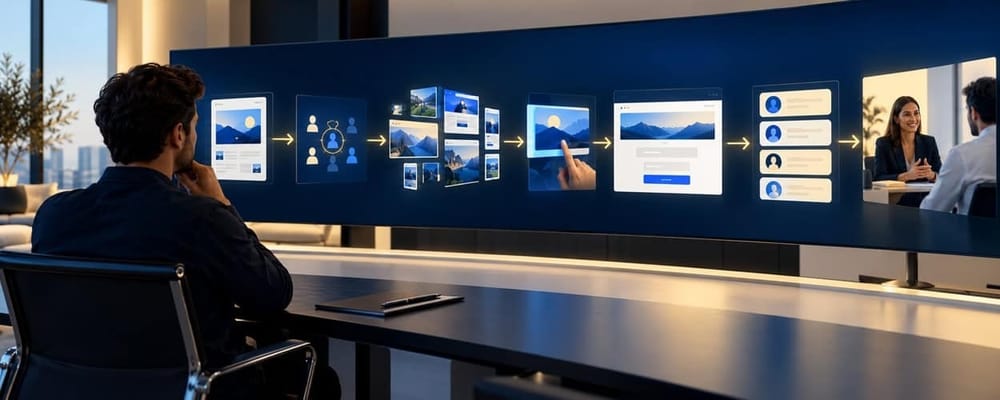
From Funnel Builders Expert's perspective, display ads are one "traffic engine" inside a complete client acquisition system - sitting alongside search, paid social, email, and automation. The flow looks like this:
- Ad → Landing Page → Lead Capture → Nurture Sequence → Booked Client
When connected to a proper funnel and CRM, display campaigns become predictable and measurable, not just "brand awareness" spend.
How display advertising works in practice
Understanding the mechanics helps you make smarter decisions about where your money goes.
When a user loads a webpage or opens an app, the available ad space triggers a request to an ad server or exchange. Within milliseconds, a display ad auction determines which eligible ad is shown. Advertisers (or their automated systems) bid in real time for that impression, and the winning ad appears on the user's screen. This entire process is called real-time bidding, and it occurs every time a user loads a webpage, allowing advertisers to bid for ad impressions instantly.
The key players in this ecosystem include:
- Advertiser - your business, setting campaign goals and budgets
- Publisher - the website or app owner selling ad inventory
- Ad networks - intermediaries like the Google Display Network that aggregate publisher inventory
- Ad exchanges - marketplaces where impressions are auctioned
- Supply-side platforms (SSPs) - tools publishers use to manage and sell inventory
- Demand-side platforms (DSPs) - tools advertisers use to buy inventory programmatically
An ad exchange, supply-side platforms, and demand-side platforms are all part of the display ad ecosystem that makes automated buying possible.
You pay through bidding models. CPC (cost per click) means you pay only when someone clicks your ad. CPM (cost per thousand impressions) means you pay for exposure regardless of clicks. Utilizing programmatic advertising automates the buying and selling of ad space in real-time, and nearly 90% of display advertising worldwide went through programmatic channels in 2025.
Tracking pixels, cookies, and increasingly first-party data make display advertising campaigns targeted and measurable. Privacy changes (like third-party cookie deprecation) are shifting the landscape toward contextual targeting and server-side tracking, but the core mechanics remain the same.

Display advertising networks and platforms (with a focus on Google Display Network)
Advertising networks are intermediaries that connect your business to thousands or millions of websites, apps, and placements where your ads can appear.
- Google Display Network (GDN) is the dominant player. It includes over 2 million third party websites, YouTube, Gmail, and popular content sites. Display ads can reach over 90% of internet users worldwide through GDN alone, making it the default starting point for most display advertising campaigns.
- Meta Audience Network extends Meta's targeting data beyond Facebook and Instagram into external apps and sites.
- Microsoft Audience Network offers smaller reach but strong performance in certain B2B verticals and geographic markets.
- Amazon DSP leverages Amazon's first-party purchase data, useful for product-adjacent services.
- Niche programmatic platforms (e.g., The Trade Desk) offer premium placements with more granular control over inventory quality.
How we choose networks for clients at Funnel Builders Expert:
- Prioritize networks with strong first-party data and integration with CRM and attribution systems
- Evaluate available ad format options: banner ads, responsive ads, rich media, video
- Consider reach versus quality - sometimes a smaller network delivers higher viewability or brand-safer environments
- For coaches and local service businesses, Google Ads (GDN + YouTube) covers 80%+ of needs; we add Meta or programmatic layers for scale
Platform choice directly affects targeting precision, available display advertising formats, and how easily campaigns integrate with marketing automation workflows.

Types of display ads: formats you can use
Display ads come in multiple ad formats, each suited for different campaign goals - whether that's awareness, engagement, or direct conversion. Display ads can appear as static images, animated GIFs, HTML5 banners, video ads, or interactive rich media.
- Banner ads - static or minimally animated image units; the most common display ad format and the backbone of most campaigns
- Responsive display ads - automatically adjust to fit available ad spaces, adapting size, layout, and format to match the placement; reduces creative workload significantly
- Rich media ads - go beyond static images with animation, video, audio, or interactive elements like quizzes and sliders
- Video ads - in-stream (pre-roll, mid-roll) or discovery units, especially on YouTube; video ads excel at brand storytelling and product demonstrations
- Native display ads - blend into content feeds to reduce banner blindness, appearing as sponsored content cards or in-feed recommendations
Responsive display ads automatically adjust to fit available ad spaces, which means a single creative set can cover leaderboard, sidebar, mobile banner, and more. At Funnel Builders Expert, we typically build a "creative stack" per campaign: multiple ad formats for the same core offer across banner, responsive, video, and native placements.

Banner ads: the workhorse of display campaigns
Banner ads are rectangular or square image-based ad units that appear at the top, sides, or within content on websites and mobile apps. Banner ads are the most common display ad format, and for good reason - they're supported almost everywhere.
- Standard IAB sizes remain critical in 2026. Optimize ads for standard IAB sizes like 300x250 (medium rectangle), 728×90 (leaderboard), 160×600 (wide skyscraper), 300×600 (half page), and 320×50 (mobile leaderboard). The Interactive Advertising Bureau defines these standard banner ad sizes as widely accepted industry dimensions for consistency across publisher websites and stronger brand recognition.
- Effectiveness despite low CTR - click-through rates for display ads average around 0.1% to 0.3%, but banners are effective because of massive reach, repeated exposure, and strong visual branding. For Business Services, benchmarks show CTR around 0.25% with CPC around $3.35.
- Coach/consultant examples - a banner ad reading "Free 30-Min Strategy Session" driving to a webinar registration landing page; or a consultant running banners with "Download My 5-Step Growth Plan" to capture email leads.
- Dual use - banner ads work in both prospecting display campaigns (cold audiences) and remarketing ads (people who visited but didn't convert). Remarketing banners typically outperform cold traffic significantly.
- Visual style - keep designs clean with readable sans-serif fonts, a strong CTA button, minimal text, consistent branding, and images showing real people (faces build trust for coaches).

Rich media and interactive display ads
Rich media ads are display ads that go beyond static images, using animation, video, audio, or interactive features like sliders, quizzes, form fields, and 360° views. Rich media ads include interactive elements like video and audio, making them significantly more engaging than standard banners.
- Higher engagement - interactive ads increase dwell time and brand recall, especially valuable for high-ticket coaching programs or premium local services where trust-building matters
- Example 1 - a rich media ad where users flip through testimonial cards from past coaching clients, each with a headshot and result metric
- Example 2 - an interactive quiz ad ("What's blocking your business growth?") that captures a lead's email and feeds them into a funnel
- When to choose rich media - mid-funnel nurturing, program launches, or brand awareness campaigns where storytelling drives decisions; ideal when the offer's lifetime value justifies higher production costs
- Trade-offs - higher creative production effort, sometimes higher CPMs, and not all placements support rich media; but display ad performance and memorability often improve enough to justify the investment

Video display ads and YouTube Ads
Video display formats differ from traditional banner ads in that they play as moving content - in-stream (pre-roll/mid-roll), as video discovery units on YouTube search results, or as short bumper ads. Video advertising is the fastest-growing segment within digital display advertising.
- YouTube Ads fit directly into display advertising campaigns through the Google Display Network, offering targeting by interests, keywords, topics, demographics, and remarketing lists
- Effective lengths in 2026 - 6–15 second bumper ads for awareness; 30–60 second story-driven ads for lead generation; the first 2–3 seconds must hook the viewer
- Funnel Builders Expert use case - sending YouTube traffic to a VSL (video sales letter) or webinar landing page, then retargeting viewers (those who watched 25–75%) with banner remarketing ads to bring them back to a booking page
- Best practices - include captions/subtitles (most mobile devices play video muted by default), show brand identity in the first 2–3 seconds, use a visible CTA overlay linking to the landing page, and ensure thumbnails are attention-grabbing
Best practices - include captions/subtitles (most mobile devices play video muted by default), show brand identity in the first 2–3 seconds, use a visible CTA overlay linking to the landing page, and ensure thumbnails are attention-grabbing
Targeting: how to get display ads in front of the right people
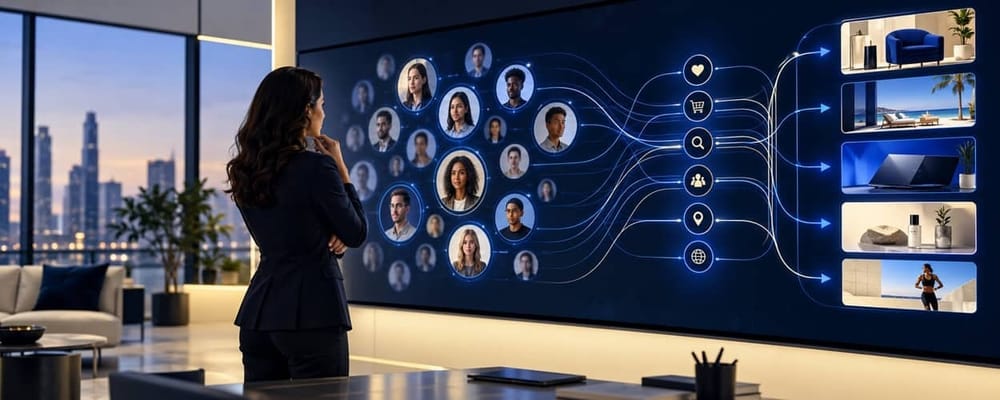
Targeting is what makes display advertising effective today versus the spray-and-pray approach of early online advertising. Advertisers can use targeting options like contextual, audience, behavioral, and retargeting to ensure ads displayed reach the right people.
- Demographic targeting - age, gender, household income, parental status
- Interest/affinity audiences - affinity targeting reaches consumers interested in specific topics (e.g., "small business owners," "fitness enthusiasts," "personal development")
- In-market audiences - users actively researching or comparing solutions (e.g., "people researching business coaching software")
- Custom intent - custom intent ads target users actively searching for similar products or services, built from recent search queries or content consumption patterns
- Lookalike/similar audiences - modeled from your existing customer list or high-value leads
- Geographic and device targeting - critical for local service businesses like pool builders in Phoenix or family lawyers in Toronto; also essential for coaches targeting specific English-speaking markets
- Device targeting - targeting mobile devices specifically if most conversions come from phone calls or mobile bookings
Effective use of display ads involves reaching the right audience, showing relevant messages, and measuring results. At Funnel Builders Expert, we combine multiple targeting layers with exclusions (removing audiences who already converted or categories that don't align) to balance reach and relevance.

Remarketing ads: turning past visitors into booked calls
Remarketing (also called retargeting) means showing retargeting ads to people who have already interacted with your website, funnel, or video content but didn't complete your desired action. Remarketing ads target users who previously interacted with your site.
- Concrete examples - people who visited a pricing page but didn't book a call; webinar registrants who didn't attend; visitors who watched 50% of a VSL but didn't opt in; abandoned checkout for a coaching program
- Tailored offers - coaches and service providers can mimic dynamic remarketing with ad creative like "Still thinking about working with us? Book your free consult" or "Webinar replay available for 48 hours"
- Performance benchmark - remarketing display ads achieve 2–3x higher conversion rates compared to cold prospecting display campaigns, though typically at higher CPM/CPC
- Frequency capping - limit daily/weekly ad impressions per user (e.g., 3–5 per day) to avoid crossing the line from persistent to annoying
- Creative sequencing - show different creative on days 1–3 (benefit-focused) versus days 4–14 (urgency or testimonial-driven) to combat ad fatigue while staying top of mind
Remarketing is where most display advertising campaigns become profitable for coaches. When someone has already visited your funnel, the cost to bring them back is a fraction of acquiring a new visitor.

Contextual and placement targeting (choosing the right content and sites)
Contextual targeting means your ads are placed on pages whose content matches topics or keywords relevant to your offer. Contextually targeted ads are placed based on website content relevance, which makes them effective even as cookie-based tracking declines.
- Topic targeting on GDN - select categories like "Business & Productivity," "Health & Fitness," or "Home Improvement" to ensure ads displayed appear alongside relevant content
- Site placement targeting - site-placed ads allow advertisers to select specific websites, YouTube channels, or apps where ads appear; this gives you direct control over where your brand shows up
- Practical examples - a fitness coach targeting health and wellness blogs; an electrician targeting local home renovation sites; a tax consultant targeting finance news sections; a flooring company targeting interior design forums
- Combining approaches - use placement targeting for control on known high-quality sites, layered with contextual filters for scale; exclude categories or sites that attract irrelevant traffic or brand-unsafe content
This approach lets you manage ad placements with precision while still accessing the massive ad inventory available through programmatic display advertising.
Display ads vs. search ads vs. native ads
Understanding when to use each channel is essential for building a complete digital marketing strategy.
- Search ads capture active intent. A user typing "Google Ads agency near me" is already looking for a solution. Click-through rates and conversion rates are higher, but reach is limited to people actively searching. Ads appear on search engine results pages.
- Display ads create or amplify demand. Display ads primarily focus on capturing passive intent or building familiarity with the brand. They reach users who aren't searching yet but match your ideal profile. Scale and visual branding are the strengths.
- Native ads blend into editorial content. They're less intrusive and reduce banner blindness, but direct response can be less predictable. Social display ads on platforms like Facebook and LinkedIn also fit here.
When to use which:
- Already have high-intent keywords converting? Layer display on top for remarketing and broader lead generation.
- Launching a new offer or entering a new market? Display and video ads build awareness before search demand exists.
- Audiences ignoring your banners? Native display ads and video can break through.
Note that many people use "banner ads" and "display ads" interchangeably, but banner ads are actually a subset of display advertising. At Funnel Builders Expert, we typically combine search, display, and paid social for coaches and local services to create one coherent client acquisition system rather than running isolated ad campaigns.

Key display advertising metrics and how to measure performance
Display advertising metrics are your campaign's scoreboard. Without them, you're guessing. Display ads provide measurable results through detailed performance metrics.
- Impressions - how many times your ad was shown
- Reach - how many unique users saw your ad
- Frequency - average number of times each person saw your ad
- Click through rate (CTR) - clicks divided by impressions; display ads average click-through rates of 0.05–0.1% for broad prospecting, and 0.1–0.3% for better-performing verticals and remarketing
- CPC (cost per click) - what you pay per click; Business Services averages around $3.35
- CPM (cost per mille) - cost per 1,000 ad impressions
- Conversion rate - percentage of clicks that become leads or booked calls
- CPA (cost per acquisition) - total cost to acquire one lead or client; CPA is a pricing model where advertisers pay only when a specific conversion occurs
- ROAS - return on ad spend; a ROAS of 4:1 means $4 revenue for every $1 spent
A low CTR in display (0.1–0.3%) can still be profitable if your landing page converts well and your funnel nurtures leads into paying clients. Viewability matters too - an online advertisement that loads below the fold and never gets seen shouldn't count the same as one placed prominently. Post-view conversions and assisted conversions in analytics platforms capture users who saw your ad but converted later through another channel.
Connecting ad platforms to a CRM and funnel analytics is critical so you can track ad impressions through to booked calls and revenue. This is a core part of what a funnel builder does at Funnel Builders Expert.

How to optimize display ad performance and avoid ad fatigue
Ad fatigue is the drop in engagement and conversions when people see the same ad creative too many times. It's one of the most common reasons display campaigns plateau.
- Frequency caps - limit daily/weekly exposure per user (e.g., 3–5 impressions per day) to balance visibility with irritation
- A/B testing - A/B test different ad variations to improve performance; test one major element at a time: headline, image, color scheme, CTA, or offer
- Creative refresh cycles - refresh creative every 30–60 days for always-on campaigns, or immediately after significant drops in CTR or conversion rate
- Segment performance - break down campaign performance by placement, device, audience segment, and time of day to find what's actually working
- Automated bidding - once you have baseline data, switch from manual CPC to strategies like Target CPA or Maximize Conversions to let the algorithm optimize
At Funnel Builders Expert, we build "creative sprints" into every client engagement. Every 4–6 weeks, our team designs new banner ads, rich media variations, and video cuts based on performance data. This prevents ad fatigue and keeps display ad performance improving over time.

Design best practices for high-converting display ads
Design can make or break a display ad campaign. Keep display ad designs simple and focused - one main idea per ad unit.
- Simplicity - one clear headline, one focal point (coach headshot, key stat, or product image), minimal clutter
- Brand consistency - include your logo, brand colors, and consistent fonts across all visual ads and ad creative to reinforce recognition after multiple impressions
- Strong CTA - include a strong call to action in every ad. Use specific language like "Book Free Strategy Session," "Watch Free Training," or "Get Local Quote Today" instead of generic "Click Here." Clear value propositions and distinct CTA buttons are essential for engaging display ads.
- High-quality visuals - use high-quality visuals for better engagement; low-resolution or stock-looking images destroy credibility instantly
- Mobile-first design - most impressions now come from mobile devices; ensure text is readable at small sizes and safe margins prevent elements from being cut off in responsive placements
- Landing page alignment - match the headline, colors, and promise of your ad creative to the landing page experience; disconnects between ad and page kill conversions
These best practices apply across banner ads, rich media, responsive ads, and even YouTube Ads thumbnails. Display advertising best practices always come back to clarity, quality, and consistency.
Connecting display ads to your landing page and funnel system
Display ads are only as effective as the landing page and funnel they send traffic to. This is where coaches and local services often win or lose their entire ROI.
A high-converting landing page should include:
- A clear promise above the fold that matches the ad's message
- Social proof (testimonials, logos, results)
- Concise benefits (not features)
- A single main CTA - book a call, register for a webinar, request a quote
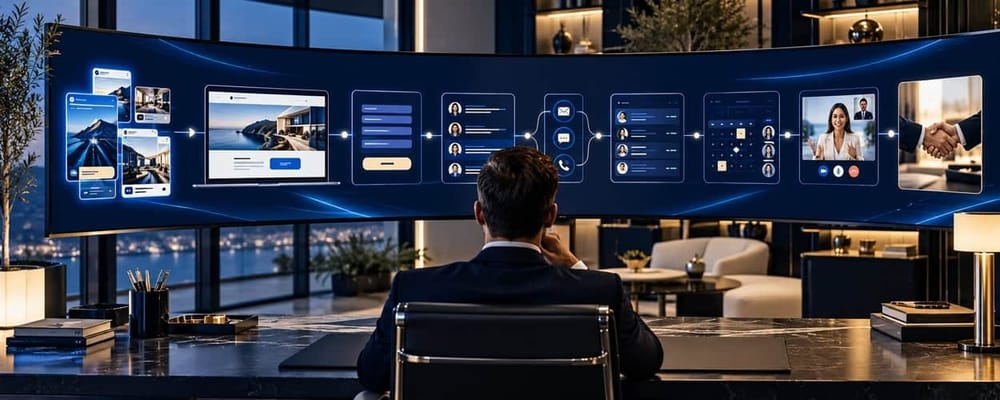
At Funnel Builders Expert, we connect display campaigns into full funnel flows: display ad → landing page → email/SMS nurture → booking page → CRM pipeline → automated follow-ups. Every step is tracked and optimized.
Technical essentials that most coaches overlook:
- Fast load speed (under 3 seconds, especially on mobile)
- Tracking tags properly installed (Google Ads conversion tag, Google Analytics, Meta Pixel)
- UTM parameters on every ad URL for accurate attribution
- Testing different landing page angles for the same traffic (e.g., VSL page vs. short-form booking page)
Without this infrastructure, even the best online ads will leak leads. The ad gets the click. The funnel gets the client.

Costs and budgeting for display advertising campaigns
Understanding display advertising cost is essential for planning realistic campaigns.
- Billing models - CPC (cost per click) is a pricing model where advertisers pay only when a user clicks the ad; CPM (cost per mille) is a pricing model where advertisers pay for 1,000 impressions regardless of clicks. Most display campaigns use CPM or automated bidding.
- CPM ranges - display ads are cost-effective with CPM rates ranging from $0.50 to $5.00 for most placements. Remarketing and premium inventory sit at the higher end.
- CPC ranges - for coaching and B2B service niches, expect $0.50–$5+ per click depending on competition, targeting, and placement quality
- Growth trajectory - display ad spending in the US is expected to reach $294.3 billion by 2029. In 2026, display ad spending in the US is expected to grow 31.9%, reflecting continued confidence from advertisers.
- Budget starting points - for coaches and local service businesses, start with $20–$100/day during a test phase; scale as CPA and ROAS become predictable
- Funnel-stage allocation - strategic budget allocation is key for effective display advertising; split spend across prospecting display campaigns, remarketing ads, and YouTube Ads for nurture
- Automation - use bid strategies like Target CPA or Maximize Conversions once you have 15–30 conversions of baseline data; automated bidding consistently outperforms manual CPC at scale
- 57.2% of total digital ad spending went to display in 2025, and programmatic buying accounted for nearly 90% of display ads - meaning most of this ad spend is transacted automatically

Common display advertising challenges (and how Funnel Builders Expert solves them)
Every ad campaign faces obstacles. Here are the most common challenges in digital display advertising and how to address them:
- Banner blindness - users unconsciously ignore display ads. Solution: use varied ad formats (video, rich media, native), fresh creative, and placement targeting on high-engagement sites.
- Ad fatigue - same creative shown repeatedly kills performance. Solution: frequency caps, creative sequencing, and regular refresh cycles.
- Low CTR - inherent in display; click-through rates for display ads average around 0.1%. Solution: stronger ad creative, tighter targeting, and compelling offers that drive action.
- Poor placements - ads showing on low-quality or irrelevant sites waste budget. Solution: negative placement lists, viewability filters, and brand safety tools.
- Ad fraud - bots and invalid traffic inflate impressions without real human views. Solution: use verified inventory, monitor for anomalies, and leverage platform fraud detection.
- Weak landing pages - clicks without conversions mean your landing page isn't doing its job. Solution: dedicated funnel pages, A/B testing, and consistent messaging between ad and page.
- Privacy shifts - roughly 40% of advertisers report that third-party cookie deprecation has impacted cross-site tracking. Solution: invest in first-party data collection, contextual targeting, and server-side tracking.
Funnel Builders Expert uses analytics, CRM data, and automation workflows to detect underperforming segments early and reallocate ad spend. We build complete, resilient display strategies - not one-off banner ad designs. Display advertising metrics and display ad performance are reviewed weekly, not monthly.

When display ads are (and aren't) right for your marketing strategy
Display ads remain one of the most versatile tools in online advertising, but they're not always the right first move.
Display advertising shines when:
- You're building awareness in a new market or geographic area
- You have a proven offer and want to scale visibility through brand awareness campaigns
- You're running a webinar, VSL, or challenge funnel and need traffic at the top
- You want to reactivate past visitors via remarketing
- Display ads can increase brand awareness by up to 12%, compounding with every additional touchpoint
Display alone is not ideal when:
- Your offer is unvalidated and you don't yet know what converts
- You have no proper landing page or tracking/CRM in place
- Your messaging is unclear and you haven't nailed your positioning
- You're expecting display to perform like search ads without funnel support
Display ads complement Local SEO, Google Search Ads, Meta Ads, and email marketing inside a one-to-many client acquisition system. If you already have organic traction and a funnel converting at a known rate, display campaigns become a powerful lever for scaling predictable growth.
Think in systems, not isolated ads. A display ad without a funnel is just a pretty picture on someone else's website.

How Funnel Builders Expert can help you scale with display ads
Funnel Builders Expert is a global network of certified funnel builders and media buyers specialized in coaches, consultants, and local service businesses across the US, Canada, Australia, New Zealand, and the UK.
- Done-for-you process - we audit your existing funnel and traffic, design a display strategy, set up Google Display Network and YouTube Ads campaigns, build ad creative (banner ads, rich media, video), connect your CRM and automation, then optimize weekly
- Complete systems, not just ads - our focus is building full client acquisition systems including landing pages, remarketing sequences, email/SMS follow-up, and CRM pipeline management
- Data-driven optimization - we track every step from ad impression to booked call to closed revenue, using display advertising metrics to continuously improve campaign performance
- Ongoing creative production - regular creative sprints to fight ad fatigue and test new angles across multiple ad formats
If you already have a validated offer and want to turn visibility into predictable revenue, display advertising campaigns deserve a place in your strategy. Book a free strategy session to see if we can reduce your cost per lead and scale your pipeline with a system that works while you focus on delivering results to your clients.
Website
Ecommerce Website
Blog Website
Website Design
Web Management
WordPress Website
SEO - AIO
AI Optimization
Local SEO
On-Off Page
SEO Audits
Technical SEO
Paid Advertising
Display Ads
Meta Ads
Google Ads
Linkedin Ads
TikTok Ads
CRM Automation
CRM Setup
Email Marketing
Lead Management
Pipeline Automation
SMS Marketing
Disclaimer: This site is not affiliated with or endorsed by Google or Meta™. All content is for educational purposes only and does not guarantee results or earnings. Your success depends on your own efforts, experience, and circumstances. Financial examples are illustrative, not promises. Always seek professional advice before making business or financial decisions. By using this site, you agree we are not liable for outcomes based on this information.
2026 © Funnels Builders Expert, a Sydney Website Design Agency product - Privacy Policy - Terms & Conditions