
Sales Funnel Strategist: How to Design Predictable Revenue Systems for Expert Businesses
If you're an online coach, consultant, or course creator bringing in €10,000 or more each month, you already know how to deliver results for your clients. The problem is that getting those clients in the first place often feels like a coin flip. One month is packed, the next is painfully quiet. A sales funnel strategist solves that problem by designing the system that turns strangers into paying customers, consistently and at a cost you can predict.
This article walks through what a sales funnel strategist actually does, what a modern funnel looks like in 2026, and how to measure funnel performance with metrics that matter.
Key Takeaways
- A sales funnel strategist designs the full customer journey from first click to repeat purchase, creating predictable, scalable revenue. Effective sales funnel strategies are critical for online coaches and consultants to scale their businesses beyond referrals.
- For expert businesses already generating revenue, a proper sales funnel strategy is the fastest way to move from random referrals to consistent, qualified prospects and a more predictable sales process.
- An effective strategist maps every stage of the funnel - top of the funnel, middle of the funnel, bottom of the funnel, and post-purchase - to specific assets like ads, landing pages, emails, and marketing automation workflows that nurture leads and increase conversion rates.
- Funnel Builders Expert builds and manages these systems as a done-for-you service, combining Local SEO, Google Ads, Meta Ads, and automation into one integrated client acquisition engine.
- The rest of this article covers what a sales funnel strategist does day-to-day, the sales funnel stages you need, and how to evaluate funnel performance with clear metrics.

What Is a Sales Funnel Strategist?
A sales funnel strategist is the person responsible for designing, mapping, and optimising the end-to-end customer journey so that strangers become paying clients and, ultimately, loyal advocates. A successful sales funnel strategist combines customer psychology, data analysis, marketing expertise, and sales process design into a single, cohesive role.
Unlike a general marketing consultant, this role spans the entire funnel - not just ads, not just a website, not just email - because understanding how sales funnels work means looking beyond any single channel or asset. Here's what they own:
- Defining the target audience based on real client data, not guesswork
- Planning the sales funnel strategy and selecting channels (paid, organic, referral)
- Aligning marketing strategy with sales strategy so both sides pull in the same direction
- Designing offers and marketing materials for each stage of the funnel
- Measuring funnel performance weekly and diagnosing bottlenecks
- Working alongside sales and marketing teams to ensure cohesion from ad click to closed deal
For expert businesses selling high-ticket offers (€2,000–€15,000), the strategist must understand relationship-based sales cycles - discovery calls, applications, qualification - rather than simple e-commerce site checkouts. To understand how this role connects to the broader build process, see what a funnel builder actually does.

Sales Funnel vs. Marketing Funnel vs. Sales Pipeline
Many founders confuse these three concepts, which creates gaps between website traffic, leads, and actual revenue. Let's separate them cleanly.
Marketing Funnel
Sales Funnel
Sales Pipeline
Focus
Attracting attention and generating new leads
Converting leads into clients
Tracking deal progress internally
Owner
Marketing teams
Strategist + sales team
Sales reps and sales managers
Key Metrics
Reach, click-through rate, cost per click, opt-in rate
Booking rate, show rate, close rate
Pipeline value, deal velocity, win rate
The marketing funnel covers awareness through lead generation: ads, social media campaigns, SEO, and content marketing that drive potential customers to a landing page or lead magnet. The sales funnel begins when a prospective customer raises their hand - opts in, books a call, sends a DM - and continues through qualification, nurture, sales calls, and onboarding. The sales pipeline is the internal deal-flow view: discovery call booked, proposal sent, contract out, won or lost. Each requires its own metrics and ownership.
The Core Stages of a Modern Sales Funnel
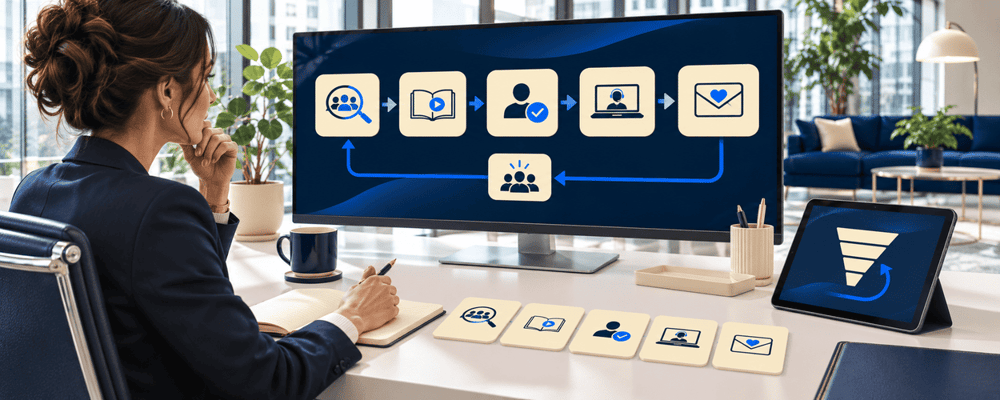
While the sales funnel model varies by business, most effective funnels in 2026 share core stages. The sales funnel has four stages: awareness, interest, decision, action. A strategist defines each stage by observable behaviour rather than vague labels.
- Awareness stage: Cold audiences encounter your brand through ads, content, or search. Awareness is the first stage where prospects learn about a product or service. Sales funnels guide customers from awareness to purchase through this initial touchpoint.
- Interest: Warm prospects engage deeper - downloading a guide, watching a webinar, reading a case study. Interest is the second stage where prospects evaluate the product against their needs.
- Decision: Potential buyers compare options, attend a strategy call, or review your offer page. Decision is the third stage where the customer decides whether to move forward or walk away.
- Action: The final purchase is completed - the prospect becomes a paying customer. Action is the final stage where the purchase is completed and the buying process concludes.
- Expansion/Retention: Post-purchase, the strategist maps onboarding, upsells, referrals, and customer retention to extend customer lifetime value.
A sales funnel typically consists of three main stages (awareness, interest, and decision), but the most complete systems also include the action and post-purchase phases. Sales funnel stages like these - including consideration and purchase - give structure to the entire buyer's journey.

How a Sales Funnel Strategist Thinks About Your Target Audience
The starting point of any sales funnel strategy is a clear definition of the target audience built on real data, not assumptions. Effective sales funnels require clear objectives and buyer personas before a single ad goes live.
A strategist defines:
- Market segment (e.g., fitness coaches in the UK making £8k–£25k/month)
- Core problem the audience faces and the desired outcome they're willing to pay for
- Buying triggers and objections that surface during the sales cycle
- Decision-makers and buying timeline for your specific offer price point
Buyer psychology involves understanding customer motivations, objections, and purchasing habits. The strategist turns this into 1–3 detailed buyer personas and then into messaging pillars used across ads, landing pages, emails, and sales calls. Practical research methods include analysing customer relationship management data, interviewing recent clients, reviewing call recordings from 2023–2026, and digging into industry insights to validate assumptions.
Designing a Full-Funnel Strategy: From Traffic to Long-Term Clients
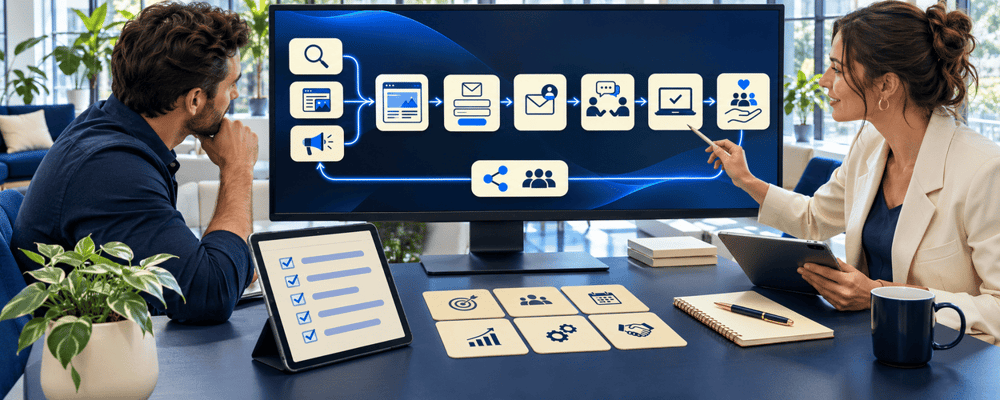
Think of this as the "zoomed out" view. The strategist maps how strangers become leads, how you nurture leads into qualified prospects, and how you convert and retain them over 6–24 months. A structured approach to customer journey mapping influences lead generation and conversion success at every step.
The plan integrates:
- Owned channels: Email, SMS, CRM - the backbone of marketing automation
- Organic traffic: Local SEO, content marketing, YouTube, social media marketing
- Paid traffic: Google Ads, Meta Ads, and targeted ad campaigns
High-converting marketing funnels help attract, capture, nurture, convert, and retain customers through this integrated approach. For a deeper look at building this system, explore our lead acquisition strategy guide.
For local service-based experts - solar consultants in Texas, performance coaches in Ontario - the strategist also factors in geography, local search terms, and offline touchpoints like events or in-person consultations. Each piece of the system hands off to the next: ads drive to landing pages, landing pages capture leads, emails nurture leads, calls convert them, and onboarding turns them into advocates.
Top of the Funnel: Driving Qualified Attention
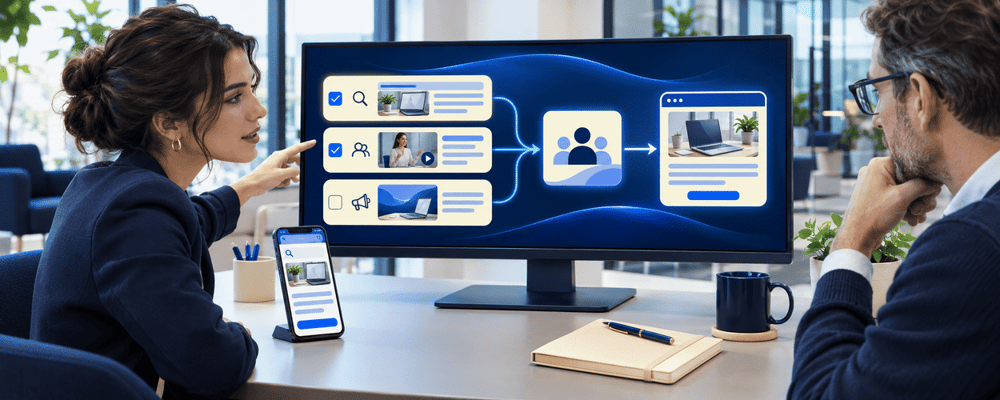
The goal at the top of the funnel is not "more clicks at any cost" but attracting the right people so later stages convert efficiently. Top-of-funnel activities focus on brand awareness, education, and lead generation. The average conversion rate for top-of-funnel marketing is 2% to 5%, which means volume and targeting both matter.
Common TOFU channels a strategist evaluates:
- Google Ads for high-intent keywords (target customers actively searching for solutions)
- Meta Ads for broad interest and lookalike audiences to engage potential customers
- Local SEO for city + service terms (mastering SEO for lead generation covers this in depth)
- YouTube or short-form video for authority-building and social proof
Lead generation captures potential customers' interest in products and services. Effective lead generation improves conversion rates and customer relationships downstream. According to coaching acquisition data, Meta Ads leads in the coaching space cost $30–$80, while referral channels often close at 40–70% versus 15–25% for cold traffic.
Early metrics include qualified reach, click-through rates, cost per click, and lead quality indicators like calendar bookings per 100 clicks.
Landing Pages, Lead Magnets, and First Conversion Points
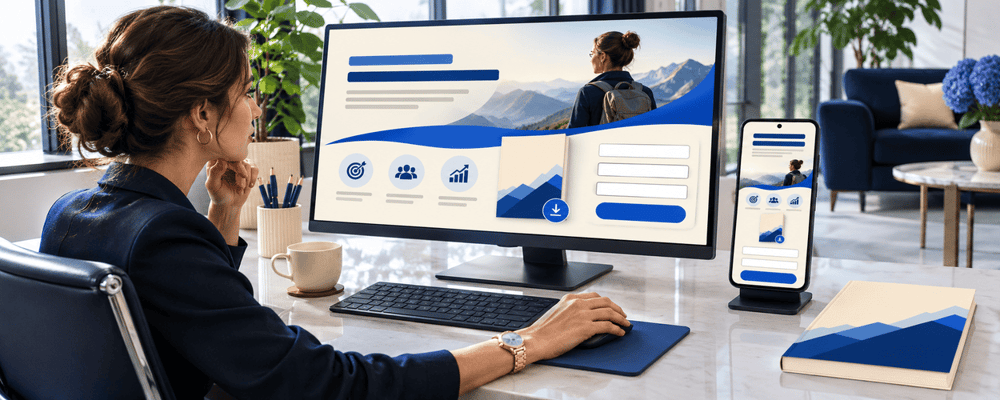
Landing pages are the first major "conversion gate" where strangers either bounce or become leads. This is one of the highest-leverage assets a sales funnel strategist designs.
Typical entry offers for expert businesses:
- A 30–45 minute webinar (live or evergreen)
- A "7-day action plan" PDF or checklist
- A short diagnostic quiz
- A free strategy session framed to attract serious, qualified leads
The strategist defines a clear value proposition, social proof, and a single call to action on each landing page. Key elements include:
- Headline: Addresses the core problem or desired outcome
- Subheadline: Explains what the prospect will get
- Benefits list: 3–5 specific outcomes
- Social proof: Testimonials, logos, results
- Form: Minimal fields to reduce friction
- Risk reversal: "No obligation" or "free" language
According to industry benchmarks, landing page conversion rates for cold traffic range from 8–15% for beginners to 35–48% for optimised pages. Sales funnel strategists use A/B testing to improve conversion rates and customer engagement, regularly testing headlines, layouts, and form fields. Conversion rates can be improved by addressing friction points in the customer journey at this stage.
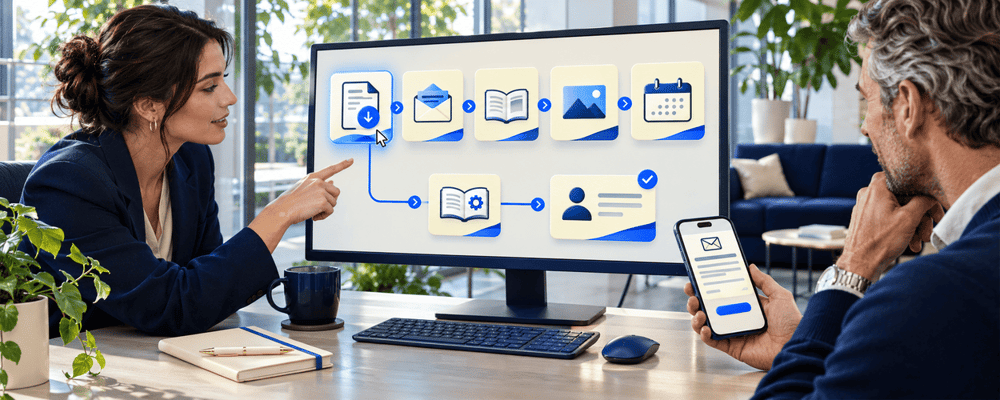
Middle of the Funnel: Nurturing Leads into Qualified Prospects
At this stage of the funnel, the goal shifts from "get the lead" to nurturing leads, educating them, and qualifying out those who aren't a fit. Middle-of-funnel strategies nurture leads with targeted content. Automated lead nurturing improves the efficiency of sales processes by maintaining customer engagement without manual follow-up.
Common nurture assets include:
- Multi-step email sequences triggered by behaviour
- SMS reminders for webinars and calls
- Retargeting ads on Meta and Google
- Value-driven content like case studies and mini-trainings
- Live or automated webinars
Implementing marketing automation can streamline the sales process and improve lead management significantly. The strategist defines behavioural triggers - opening 3+ emails, attending 50%+ of a webinar, clicking sales pages - as signals of increasing intent.
Effective sales funnel management includes segmenting leads and analyzing customer behavior. Automation platforms move leads between segments based on engagement, ensuring the sales team focuses on the most promising opportunities. Marketing automation workflows handle this heavy lifting. Data shows that mature reminder systems can recover 20–29% of no-shows through automated sequences, according to automation research.

Bottom of the Funnel: Converting Opportunities into Clients
This stage is about turning engaged, educated leads into paying customers using structured sales processes rather than random one-off calls. Most sales funnels concentrate their revenue generation here.
Typical BOFU mechanisms for high-ticket experts:
- Application funnels leading to Zoom strategy calls
- Video sales letters with limited-time bonuses
- Live "conversion events" like 5-day challenges
- Carefully scripted follow-up calls for qualified prospects
The strategist works with the sales team to define qualification criteria - budget, decision authority, urgency, problem fit - and to align messaging between marketing materials and sales conversations. Sales funnel management helps prioritize interactions throughout the sales process at this critical stage.
Key bottom-of-funnel assets include sales pages, offer breakdowns, FAQ sections, testimonials, risk reversals (guarantees, flexible payment plans), and automated follow-up for no-shows or "not yet" prospects. For more on structuring this conversion process, see our guide to client acquisition strategies.
BOFU metrics to track: show-up rate (60–70% is typical), close rate on shown calls (30–50% for well-tuned funnels), average sales cycle length, and cost per acquired client.
Post-Purchase Strategy: Maximising Customer Lifetime Value
A professional sales funnel strategist designs beyond the initial sale, mapping how to impress new clients, generate referrals, and systematically increase customer lifetime value. The lifetime value of a customer can be maximized through effective upselling and retention strategies.
Key elements include:
- Onboarding sequences: Welcome emails, checklists, kickoff calls in the first 7 days
- Upsell and cross-sell offers: Moving clients from a €2,500 starter program to a €10,000 mastermind
- Referral campaigns: Structured requests for introductions, incentivised referrals
- Customer success touchpoints: Check-ins at 30, 60, and 90 days
For local service businesses - home improvement contractors, health clinics, a brick and mortar store - this stage often includes review generation on Google Business Profile, reactivation campaigns, and seasonal reminders that drive future purchases. One documented case shows a business growing from 60 to 150 clients and adding $3.6 million in annual recurring revenue over 18 months by building out a full-funnel system with strong post-purchase retention.
Customer retention is where the real profit compounds. Track renewal rates, customer lifetime, and average revenue per client over 12–24 months rather than focusing solely on first-purchase revenue. Customer feedback loops at this stage also feed valuable insights back into your marketing efforts and offer development.
Analytics and KPIs: Measuring Funnel Performance
What separates a strategist from a "tactician" is the discipline of tracking the right key performance indicators and improving them over time. Data analysis and metrics tracking are essential for optimizing sales funnel performance. Sales funnels help identify problems where prospects drop out at each stage.
Essential metrics by funnel stage:
Stage
Metrics
TOFU
Click-through rates, cost per click, qualified traffic share
MOFU
Opt-in rate, lead-to-application rate, email engagement
BOFU
Call show-up rate, close rate, revenue per opportunity
Retention
Customer lifetime value, churn, repeat purchase rate
The revenue decomposition model breaks it down: Revenue = Leads × Booking rate × Show rate × Close rate × Average deal value. Marketers should track metrics such as customer acquisition cost and average order value alongside this formula.
The strategist builds a dashboard - often inside the CRM - that gives weekly visibility into the entire funnel and highlights bottlenecks. Continuous optimization and review of funnel performance are necessary for ongoing improvements in sales capabilities. You can gain valuable insights from Google Analytics and your CRM data to optimize campaigns and track progress at every stage. Data insights drive smarter decisions than gut feel ever could.
Working with a Sales Funnel Strategist (and What to Expect)
Here's what a typical engagement looks like:
- Audit (Week 1–2): The strategist reviews your ad accounts, analytics, CRM, past marketing campaigns, and sales call recordings to gain valuable insights and identify weak points.
- Strategy Roadmap (Week 2–4): Funnel maps, offer positioning, buyer personas, channel selection, and KPI targets.
- Implementation (Week 4–8): Landing pages, email sequences, ad creative, automation workflows, and sales knowledge assets are built.
- Testing (Month 2–3): A/B tests on creative, copy, audiences. Initial data collected.Optimisation (Month 3–12): Ongoing refinements based on real performance data.
A good strategist will ask for: access to ad accounts, analytics, CRM, past campaign data, sales call recordings, and clear revenue goals for the next 6–12 months. Deliverables include funnel maps, copy outlines, ad strategy documents, automation workflows, and KPI dashboards.
This is fundamentally different from hiring a single platform specialist - say, a Facebook ads freelancer - who may drive traffic but doesn't own the strong sales funnel performance, the sales strategy, or the buying journey from end to end. Sales funnel software alone won't solve the problem either. You need both the tools and the thinking behind them.
How Funnel Builders Expert Approaches Sales Funnel Strategy
Funnel Builders Expert focuses on B2B and expert businesses - online coaches, consultants, and course creators doing at least €10,000/month - who want to scale via one-to-many delivery models. Our approach integrates every piece of the system:
- Local SEO to capture hot local intent from target customers searching right now
- Google Ads and Meta Ads to generate consistent, controllable traffic and social media campaigns that build authority
- Conversion-focused landing page and website design that create content and assets built to convert, not just look good
- CRM setup and marketing automation to nurture leads at every funnel stage
Our global-local model means a network of certified funnel builders and automation specialists across the US, Canada, UK, Australia, and New Zealand who understand regional markets, digital marketing regulations, and local business environments.
The philosophy is simple: no fluff, just systems. We prioritise measurable funnel performance, predictable lead flow, and scalable client acquisition rather than vanity metrics or one-off marketing tactics. Businesses can benefit from employing a sales funnel strategist to build a sales funnel that actually delivers - not just to create content that looks impressive but goes nowhere.
Frequently Asked Questions
Do I really need a sales funnel strategist if I'm already getting clients from referrals?
Referrals are an excellent foundation but inherently unpredictable, often causing feast-or-famine months and limiting how far the business can scale. A strategist doesn't replace referrals - they build a parallel, controllable client acquisition engine so the business can dial lead flow up or down on demand. Many Funnel Builders Expert clients start with strong referral volume and use funnels to add €10,000–€50,000/month in predictable revenue on top of word-of-mouth.
How long does it take to see results from a new sales funnel strategy?
For established coaches and consultants with validated offers, initial results (qualified leads, booked calls) can often appear within 30–60 days of launching ads and funnel assets. Full optimisation - stable cost per lead and cost per client, reliable show-up rates, clear benchmarks - usually takes 90–180 days of testing. If your sales cycle runs 3–6 months, expect leading indicators first and revenue compounding later.
What's the difference between hiring a sales funnel strategist and buying sales funnel software?
Tools like funnel builders and CRMs provide infrastructure - pages, forms, automations - but they do not decide who to target, what to say, what to offer, or how to move people through each funnel stage. A strategist plans the logic, messaging, and measurement, then chooses the right tech stack. Buying software alone is like buying gym equipment without a training plan. Funnel Builders Expert both designs the strategy and implements it inside platforms that fit the client's situation.
Can a sales funnel strategist help with offline or hybrid businesses?
Yes. Many local service providers - home improvement contractors, medical practitioners, legal consultants - close deals offline even when leads originate online. The strategist maps how digital touchpoints (ads, landing pages, nurture emails) feed into offline actions (phone calls, showroom visits, in-person consultations) and back into CRM tracking. This hybrid mapping is a core part of Funnel Builders Expert's work with local businesses.
How do I know if my existing funnel has "leaks" that a strategist could fix?
Common warning signs include: high traffic but low leads, many leads but few booked calls, frequent no-shows, decent call volume but low close rates, or strong first purchases but poor customer retention. A strategist runs a funnel audit, examining data from each stage to pinpoint where qualified prospects are dropping off. Even a 10–20% improvement at a single weak point - like your landing page conversion or show-up rate - can significantly increase total revenue without increasing ad spend.

Website.
Ecommerce Website
Blog Website
Website Design
Web Management
WordPress Website
SEO - AIO
AI Optimization
Local SEO
On-Off Page
SEO Audits
Technical SEO
Paid Advertising
Display Ads
Meta Ads
Google Ads
Linkedin Ads
TikTok Ads
CRM Automation
CRM Setup
Email Marketing
Lead Management
Pipeline Automation
SMS Marketing
Disclaimer: This site is not affiliated with or endorsed by Google or Meta™. All content is for educational purposes only and does not guarantee results or earnings. Your success depends on your own efforts, experience, and circumstances. Financial examples are illustrative, not promises. Always seek professional advice before making business or financial decisions. By using this site, you agree we are not liable for outcomes based on this information.
2026 © Funnels Builders Expert, a Sydney Website Design Agency product - Privacy Policy - Terms & Conditions