Landscaping Sales Funnels: How to Turn Clicks into Contracts in 2026
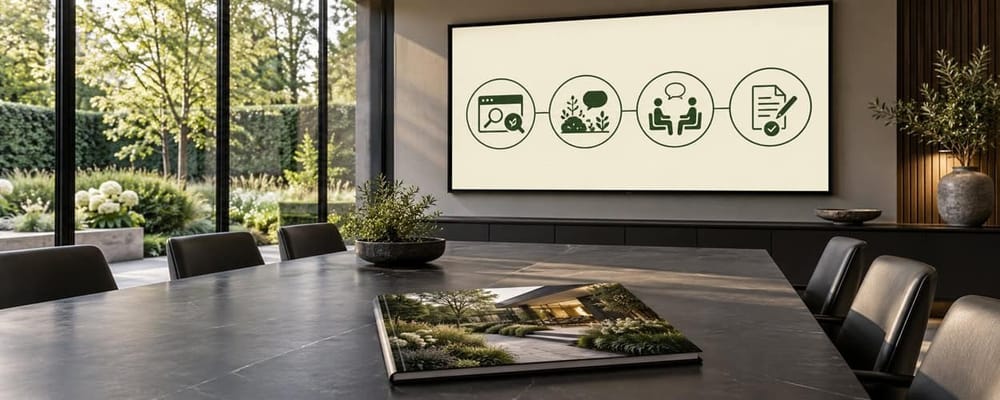
Every landscaping company runs some form of marketing. Yard signs go up, Google Ads campaigns launch in spring, maybe a stack of postcards goes out in February. But without a structured system connecting those efforts, most of the leads that come in simply disappear. A landscaping sales funnel fixes that by turning scattered tactics into a single, measurable path from first click to signed contract.
Key Takeaways
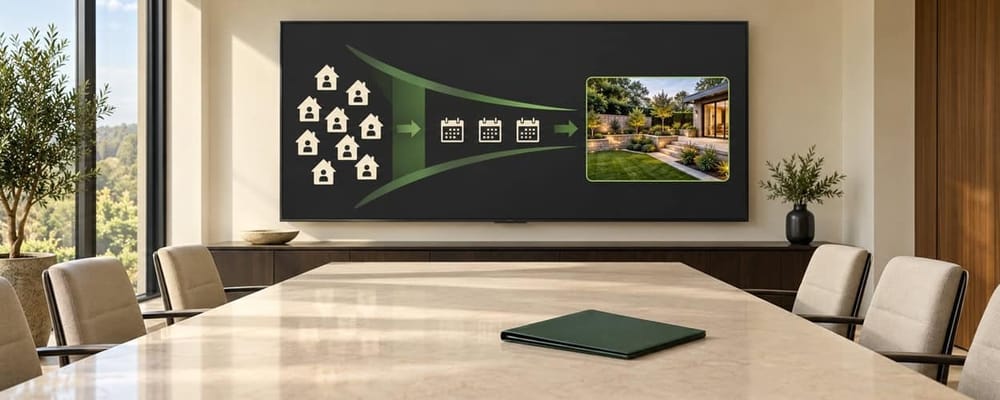
A landscaping sales funnel is a step-by-step system that moves strangers-whether they find you through a Google search, a Facebook ad, or a direct mail postcard-all the way to booked lawn care and landscaping projects. Each stage of a funnel should focus on moving prospects closer to a decision, narrowing a wide audience down to qualified clients ready to hire.
Most landscaping businesses leak money because they send paid traffic to weak, non-mobile friendly websites with no clear next step. Visitors land, glance around, and leave. Without a dedicated landing page, an instant response, and automated follow ups, your advertising budget disappears faster than spring rain.
A modern funnel for a local landscaping company must combine local SEO, Google Ads, a high-converting landing page, and automated follow-up sequences (email and SMS) to consistently grow the client base. At Funnel Builders Expert, we design, build, and automate these systems specifically for local landscaping businesses across the US, Canada, UK, Australia, and New Zealand. This article walks through each funnel stage with concrete examples and ends with FAQs to help you plan your next season.
What Is a Landscaping Sales Funnel (And Why It Matters More Than Ever)?
A landscaping sales funnel is the path a homeowner travels from first impression-a Google search, a flyer in the mailbox, an ad in their Instagram feed-to a signed maintenance contract or design-build project. Effective sales funnels guide potential customers from awareness to booking, removing guesswork at every step.
Picture this: Sarah in Austin searches "lawn care near me" in March 2026. She sees your Google Business Profile, clicks through to a landing page offering a spring clean-up package, fills out a short form, gets an instant text confirmation, and receives a follow-up call the same afternoon. By Friday, she has an on-site estimate. By Monday, she's a client. That is a funnel working.
Compare that to random marketing tactics-sporadic ads, an occasional postcard, yard signs with no tracking. Those efforts generate some calls, but there is no system to capture, nurture, or close. A connected funnel tracks and follows up with each lead automatically.
Typical funnel stages for a landscaping company:
- Traffic: Google Ads, local SEO, social media, direct mail
- Landing page: dedicated page per service with a quote-request form
- Lead capture: form fill, phone call, or text message
- Follow up: automated SMS and email sequences
- On-site estimate: standardized, professional visit
- Job won: proposal signed, deposit collected
- Review + referral system: post-job automation
Funnel Builders Expert specializes in building these complete acquisition systems for local service businesses, including landscaping companies across every major market.

Designing the Ideal First Impression: Your Landscaping Funnel Entry Points
A strong first impression usually happens online now. Since 80% of local customers use search engines to find service providers, that search results page is where your funnel begins.
A mobile friendly website, an updated Google Business Profile, and consistent branding across ads, social media, and direct mail all work together as "front doors" to the funnel. Research shows that 70% of customers visit businesses with a complete Google Business Profile, so keeping yours current with photos, hours, services, and local citations with a consistent business name, address, and phone number is non-negotiable.
Your first impression assets should highlight clear visuals of real lawns, patios, and garden projects, fast page load, and obvious proof elements like online reviews, years in business, and certifications that help build trust. These entry-point assets also help a local audience feel confident enough to contact the company. Reputable local services like landscaping require high trust and visual proof before a homeowner will even pick up the phone.
Include one primary call to action across all entry points-something like "Request a 24-Hour Quote" or "Book a Free 15-Minute Landscape Assessment"-to avoid confusion. Add tracking at this stage: UTM parameters on digital ads, call tracking numbers for different campaigns, and unique offer codes on postcards so you can later see which first impressions fill the funnel best.
Top of Funnel: Attracting Quality Landscaping Leads Online
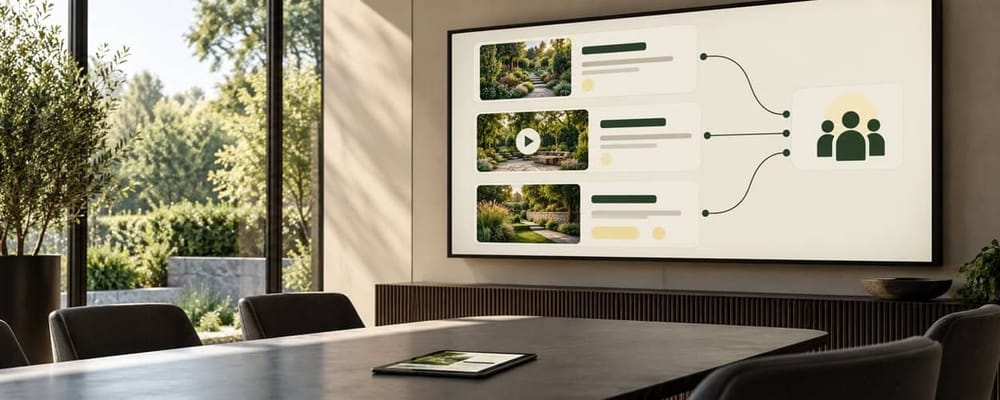
This stage is about digital traffic sources that help generate leads and bring new people into your landscaping sales funnel. High-quality leads require targeted marketing efforts specific to the services you offer.
Google Ads can target high-intent searches like "lawn care service in Phoenix" or "backyard landscaping design Dallas" with location-based targeting and ad extensions (call, location, price). Google Ads PPC typically costs $25 to $60 per lead, while Google Local Service Ads cost $15 to $40 per lead and often deliver higher-intent prospects because homeowners see your reviews and credentials before clicking.
Local SEO basics-optimizing for local keywords, creating location-specific pages (e.g., "Landscaping Services in Plano, TX"), and maintaining consistent NAP citations-drive free organic traffic into the funnel over time, while directory listings and location pages help your local audience find you in search. Using local keywords helps your landscaping business rank higher in local search results, and this compounds month after month. For a deeper dive, see our guide on SEO for lead generation.
Content marketing generates three times more leads than outbound marketing. Blog posts like "Spring 2026 Lawn Aeration Checklist for Chicago Homeowners" capture early-stage researchers who are interested but not yet ready to buy. Video ads on YouTube cost pennies per view and let you showcase dramatic before-and-after transformations.
Social media is a trust channel, not a lead generation channel. Instagram is ideal for showcasing visual landscaping work-posting two to three times a week builds audience engagement, and using local hashtags helps reach potential clients in your city. But always push traffic from social to a dedicated funnel landing page, not a generic homepage. Stay active only on platforms that make sense for your service area and customers.

Offline Funnel Entry: Direct Mail, Yard Signs, and Local Campaigns
Many landscaping businesses still rely on offline tactics, and that is perfectly fine-as long as you plug them into a modern funnel. Capturing local attention is crucial at the top of the sales funnel, whether it happens on a screen or in a mailbox.
Direct mail postcards sent in February or March can promote "Seasonal Lawn Care Bundle" offers and send recipients to a specific landing page or QR code tracked in the funnel. Postcards achieve a 5.7% response rate in direct mail campaigns, which is strong compared to most digital display ads. A Tampa landscaping business combined Local Service Ads with trimmed yard sign spend and better landing pages, booking 3× more jobs per month on the same budget.
Door hangers and yard signs on active job sites should include simple, scannable URLs or QR codes that push curious neighbors into the same quote-request funnel. Local events-home and garden shows, HOA meetings-can feed the funnel via tablets collecting emails, "enter to win a free spring clean-up" contests, or SMS opt-ins. That kind of local visibility can generate leads over time, especially when your team is visibly involved in neighborhood events or HOA activity.
Every offline campaign should connect to a digital capture mechanism (form, SMS keyword, or booking link) instead of stopping at a phone number only. If you are spending money on print without tracking, you have no way to know if it is working. Homeowners should know what to expect after they scan or submit details, whether that is a quote follow-up, pricing info, or a booked call.

Middle of Funnel: High-Converting Landscaping Landing Pages
Once people click an ad or scan a postcard, the landing page becomes the most important part of the landscaping sales funnel. Creating dedicated landing pages improves lead capture for specific services offered.
For each core offer-lawn care maintenance plans, hardscaping projects, seasonal clean-ups-your landscaping company should have a dedicated landing page instead of a generic services page. A Shakopee, MN lawn care company redesigned its site with mobile-first, service-specific pages and saw total conversions increase 181.8%, hitting a sitewide conversion rate of roughly 20.8%.
Essential elements of a high-converting landscaping landing page:
- Hero image of real, local work (not stock photos)
- Clear headline with local keywords (e.g., "Professional Hardscaping in Denver")
- 3–5 bullet benefits ("Same-day estimates," "Licensed & insured," "100% satisfaction guarantee")
- Social proof: displaying reviews prominently and before/after project galleries builds credibility with potential customers
- Simple quote-request form with minimal fields
The page must be mobile friendly with click-to-call buttons, large form fields, and no clutter. Engaging visuals are critical for marketing landscaping services-homeowners want to see what their yard could look like. Add urgency: "Spring 2026 slots filling fast in Denver" or "Book before April 15 for 10% off your first lawn care visit." Sales funnels increase conversion rates by educating prospects on services before they ever speak to you.
Lead Capture: Forms, Calls, and Instant Response
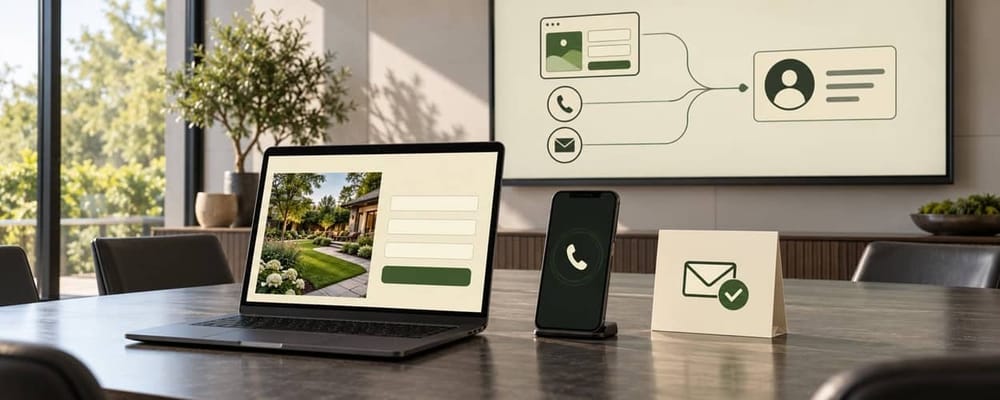
The goal at this stage is to convert anonymous visitors into identifiable leads your landscaping business can follow up with. Using interactive tools like project estimators helps engage prospects early and makes the experience feel personalized rather than transactional.
A simple, conversion-focused form should ask only key fields: name, address, email, phone, type of service, and preferred timeframe. These qualifying questions reduce friction while still filtering the lead. Offer multiple contact options-web form, click-to-call, and an optional "text us for a fast quote" button-to match different homeowner preferences.
An automated confirmation page and instant email or SMS acknowledging the request ("We'll call within 2 business hours") should also tell the lead what to expect next, whether that's a same-day callback, pricing details, or a discovery call. Funnel Builders Expert typically integrates submissions directly into a CRM, tagging each lead by source-Google Ads, local SEO, direct mail-for later reporting. Similar to how pool builders manage high-ticket inquiries, every landscaping lead should be captured and routed instantly so your team can respond fast, whether it comes through a form, phone call, or text.
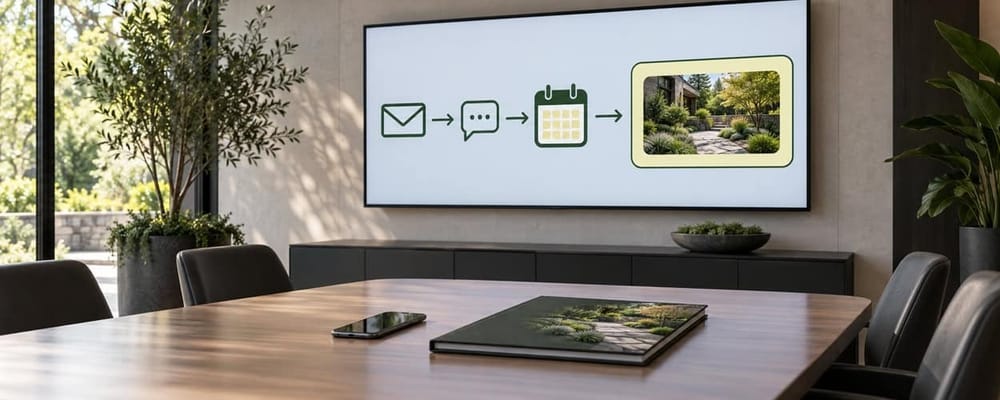
Automated Follow-Up: Turning Landscaping Leads into Booked Jobs
Most landscaping businesses lose deals because they do not follow up fast or often enough. Automation can reduce response time to potential clients from hours (or days) to seconds, and AI can handle follow ups without human intervention.
A New Jersey one-person landscaping firm implemented an AI receptionist that answered every call in under one second, combined with a 3-touch automated quote follow-up. Jobs per week jumped from 5 to 12-without hiring additional staff.
A basic follow-up sequence looks like this:
Day
Action
Channel
0
Instant confirmation
SMS
1
Call attempt + voicemail
Phone
2-5
Reminder with project photos and FAQs
7
"Still interested?" with clear next step
SMS
Automated email sequences can nurture undecided leads effectively with project photos, educational tips like "How to Prepare Your Backyard for Summer 2026," and links to your portfolio. Email marketing has a 98% open rate for SMS compared to 20% for email, so blending both channels is essential. Follow-up communications should always include a clear next step. Personalized follow-up can recover sales opportunities that might otherwise be lost.
Automation tools ensure consistent messaging across communications, and using automation frees up time for hands-on activities like actually building landscapes. Automated reminders also reduce no-shows for estimates and ongoing lawn care visits by sending a text the day before and the morning of the appointment. For more on building these workflows, see our marketing automation workflow guide.
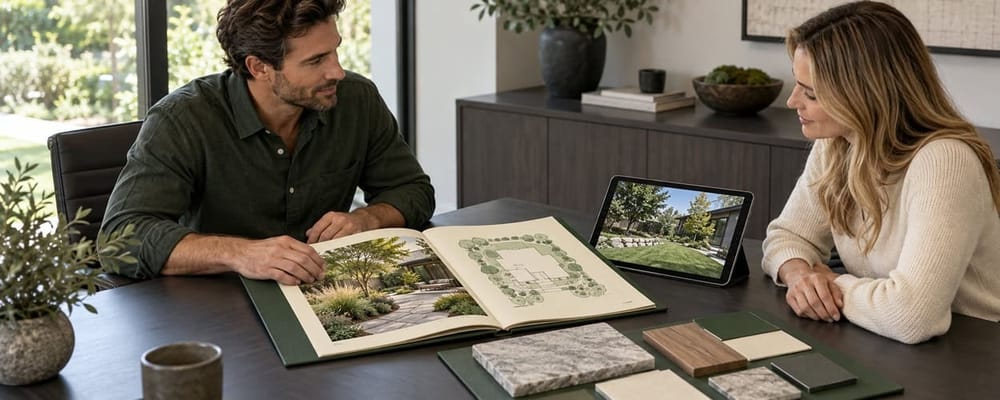
Closing the Job: Estimates, Proposals, and On-Site Experience
Even the best marketing funnel fails if the estimate and proposal process is slow or unclear. A landscaper in Thousand Oaks, CA was taking 3–5 days to deliver estimates and losing roughly 30% of leads to competitors before the quote even arrived.
Standardize an on-site estimate script that mirrors the information collected in the funnel-budget range, project type, timeline-for a seamless client experience. Before presenting final options, confirm whether anyone else is involved in the decision. Qualified prospects are more likely to convert when provided clear pricing options, so present tiered packages when possible.
Digital proposals sent within 24 hours, with clear scope, photos, and optional add-on packages (e.g., seasonal lawn care after a hardscape installation), significantly improve close rates. Use simple e-sign tools and deposit collection links so clients can approve work from their phone, maintaining the smooth, mobile friendly funnel experience. Log closing data-won, lost, reasons, service type-back into the CRM to refine audience targeting and funnel messaging over time.

After the Job: Reviews, Referrals, and Recurring Lawn Care Revenue
A landscaping sales funnel does not end at the first project. It should create repeat business and referrals that keep your pipeline full.
Since 91% of homeowners consider online reviews important when choosing a contractor, automated post-job sequences should request a Google review within 24 hours of completion, including a direct review link for one-tap ease. The NJ landscaper mentioned earlier went from 2 to 47 reviews in 90 days using this approach, jumping from page 3 to the top 3 in the local pack. Businesses should respond to every review, including negative feedback, because that builds more trust than having only five-star ratings-a business with 4.7 stars and 150 reviews is preferred over a 5.0 with 8 reviews. Positive reviews significantly influence clients' hiring decisions, and review generation is a key tactic for sustaining local service visibility.
Sales funnels should include strategies to encourage client referrals post-service. A simple referral offer-"Refer a neighbor and both of you get 15% off your next lawn care service"-delivered via email and SMS 7–10 days after a successful job helps expand your client base through word-of-mouth. You can also partner with nearby home service businesses or real estate professionals to expand referral flow.
Offer ongoing contracts and seasonal lawn care maintenance plans, with automated renewal reminders each year before peak season starts. Recurring maintenance services provide a significant revenue stream for landscapers. Weekly mowing agreements, fertilization programs, and seasonal clean-ups turn one-time customers into repeat customers. This "back-end" of the funnel can double the lifetime value of each client and keeps your landscaping business pipeline full even when ad spend is reduced.
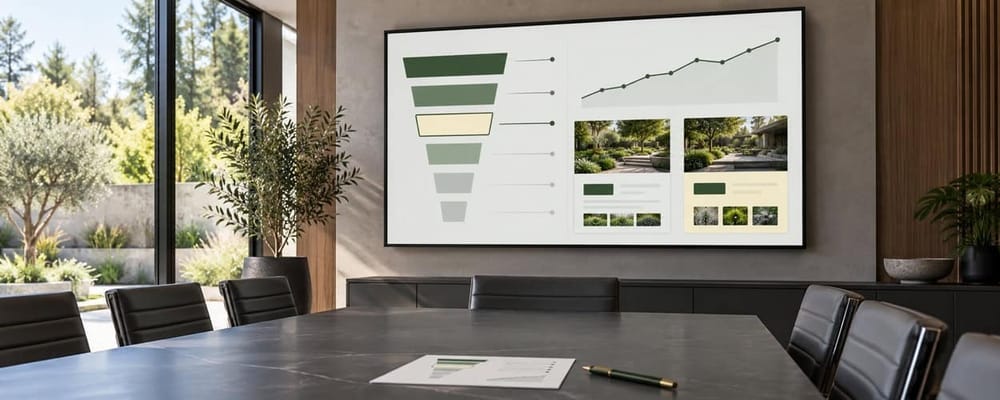
Measuring and Improving Your Landscaping Sales Funnel
What makes a funnel powerful is not just its structure but the ability to measure each stage and make data-driven improvements. Tracking metrics such as cost per lead is essential for funnel performance analysis.
Key metrics to track for a landscaping company:
- Landing page conversion rate (target: 10–20%+)
- Cost per lead by channel (Google Ads, local SEO, direct mail)
- Lead-to-estimate booking rate
- Estimate-to-job close rate
- Customer lifetime value (especially from ongoing contracts)
Intrigue's H1 2026 Landscape Marketing Index showed that while paid click-through rates fell to about 2.6%, downstream conversion rates rose to roughly 2.12% because businesses improved their funnels after the click. Cost per quotable lead also dropped significantly year-over-year.
Review funnel performance at least monthly. Compare spring 2026 campaign results across different offers and neighborhoods. A/B test headlines, images, and offers on landing pages-you can increase conversion without spending more on advertising. Funnel Builders Expert sets up dashboards and ongoing optimization as part of every build, so you can treat tracking as an investment decision and clearly see where to invest more or cut back based on lead value and ROI. For a broader look at tracking and strategy, explore our lead acquisition strategy guide.
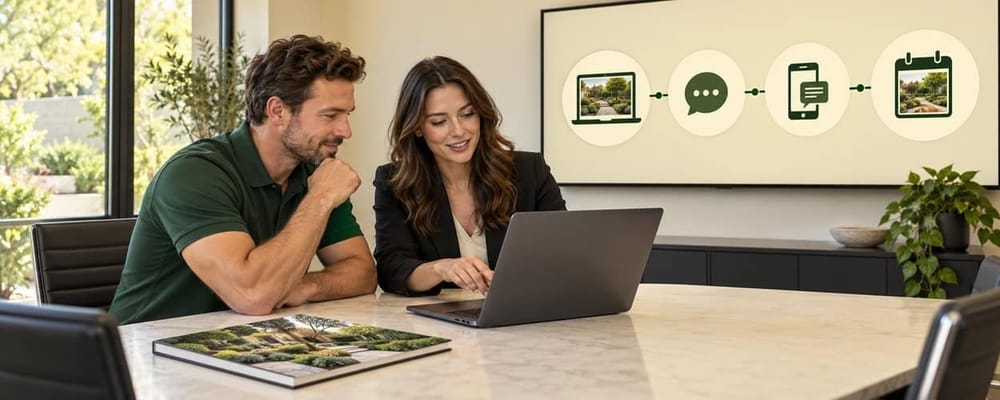
Working with Funnel Builders Expert to Build Your Landscaping Funnel
Many landscaping businesses do not have the time or expertise to connect Google Ads, local SEO, landing pages, CRM, and automation into one system. That is exactly what Funnel Builders Expert does.
Our done-for-you process: strategy workshop → funnel architecture → copy and design → tech setup → testing → launch. Our team includes local experts across the US, Canada, UK, Australia, and New Zealand who understand seasonal patterns, local keywords, and homeowner expectations in your specific market.
We focus on complete lifecycle systems-attract, capture, nurture, convert, and multiply clients-rather than isolated marketing tactics. Similar principles apply across the home improvement industry, from kitchen remodelers to electricians, but every funnel we build is customized, and some companies prefer a partner who understands the landscaping industry and can tailor the tools and process to match how they actually operate.
Ready to stop leaking leads? Book a free strategy session to map out a custom landscaping sales funnel for your upcoming season.

Frequently Asked Questions About Landscaping Sales Funnels
How long does it take for a landscaping sales funnel to start producing results?
Paid traffic sources like Google Ads and Facebook Ads can start generating new leads for a funnel within the first 7–14 days if campaigns are set up correctly. Local SEO and content marketing usually take 3–6 months to show consistent impact but then become a lower-cost, compounding traffic source. Plan at least one full season-spring through fall 2026-to properly test, refine, and stabilize funnel performance.
Do small landscaping businesses really need a full sales funnel?
Even solo landscapers benefit from simple funnels that capture leads, send automatic confirmations, and remind clients about estimates and appointments. A small operation can start with one core funnel-say, for lawn care contracts-and add more complex automation later as the client base grows. Funnels actually reduce admin time by automating follow ups, so small teams can manage their schedule and stay focused on on-site work.
Can I build a landscaping sales funnel myself without an agency?
It is possible to build a basic funnel using website builders, simple forms, and entry-level email marketing tools. However, common DIY challenges include tracking issues, poor mobile design, and misconfigured Google Ads that waste budget. Landscapers comfortable with tech can start small, but those investing heavily in ads or aiming to expand quickly should consider expert help to avoid costly mistakes.
What budget should I plan for driving traffic into my funnel?
Landscaping companies should budget 7–10% of gross revenue for marketing-companies spending less than 5% on marketing tend to lose ground to competitors. A $300,000/year landscaping company might test $1,000–$2,000/month in paid traffic while building up local SEO and email marketing. The exact budget depends on local competition, your service mix (recurring lawn care vs. high-ticket hardscaping), and how quickly you want growth.
How do sales funnels differ for lawn care vs. design-build landscaping projects?
Lawn care funnels typically focus on volume and recurring contracts, using simpler offers like "first mow free with 2026 season signup" and shorter decision cycles. Design-build and hardscaping funnels must include more education, visuals, and longer nurturing sequences because projects are higher ticket and take weeks or months to decide. Most landscaping businesses in the landscaping industry should eventually run at least two funnels: one optimized for recurring lawn care and one for larger design or installation jobs that build relationships over a longer sales cycle.

Website.
Ecommerce Website
Blog Website
Website Design
Web Management
WordPress Website
SEO - AIO
AI Optimization
Local SEO
On-Off Page
SEO Audits
Technical SEO
Paid Advertising
Display Ads
Meta Ads
Google Ads
Linkedin Ads
TikTok Ads
CRM Automation
CRM Setup
Email Marketing
Lead Management
Pipeline Automation
SMS Marketing
Disclaimer: This site is not affiliated with or endorsed by Google or Meta™. All content is for educational purposes only and does not guarantee results or earnings. Your success depends on your own efforts, experience, and circumstances. Financial examples are illustrative, not promises. Always seek professional advice before making business or financial decisions. By using this site, you agree we are not liable for outcomes based on this information.
2026 © Funnels Builders Expert, a Sydney Website Design Agency product - Privacy Policy - Terms & Conditions