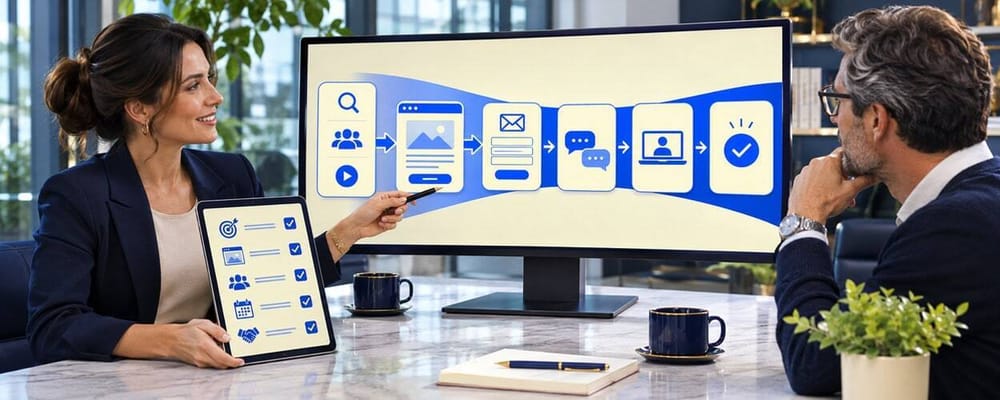
Business Sales Funnels: How to Design, Track, and Scale a High-Converting Funnel in 2026
Most businesses don't have a lead problem. They have a funnel problem. Traffic comes in, clicks happen, maybe a few inquiries trickle through-but there's no structured system converting strangers into paying clients. That's the gap a properly built sales funnel closes.
This guide breaks down exactly how to design, measure, and scale a business sales funnel in 2026-whether you're a coach selling a $5,000 program, a SaaS founder onboarding trial users, or a local contractor who needs booked jobs every week.
Key Takeaways
- A sales funnel represents the customer journey to purchase, moving people through TOFU (awareness), MOFU (consideration), and BOFU (decision) stages. Each stage of the funnel matters because a leak anywhere means lost revenue everywhere.
- For coaches, consultants, and course creators doing $10,000+/month, the primary function of an effective sales funnel is to generate qualified leads and convert them into booked calls or automated enrollments-not just collect email addresses.
- High-performing funnels are built around a clearly defined target audience, a compelling offer, a focused landing page, and simple but consistent follow-up automation. Complexity kills early-stage funnels.
- Funnel Builders Expert specializes in done-for-you B2B sales funnel systems-ads, funnels, marketing automation, and CRM-so founders can focus on delivery rather than wrestling with tech and media buying.
- This article covers every sales funnel stage, concrete sales funnel examples for B2B, SaaS, and service businesses, and the exact sales funnel metrics you need to track in 2026.
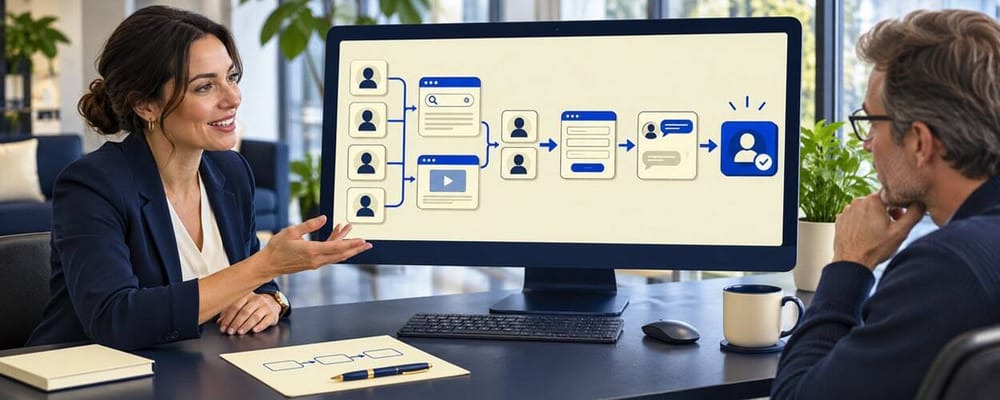
What Is a Business Sales Funnel and How Does It Work?
A business sales funnel is a visual map of the sales funnel process from first touchpoint to paying customer-and beyond to renewal and upsell. It's the system that turns a stranger scrolling past your ad into a client who sends referrals.
Here's how a sales funnel works in plain terms: lots of website visitors enter the top. Fewer, more interested people move to the middle as leads. Even fewer-but highly qualified-prospects reach the bottom and become paying customers. Sales funnels help identify where potential customers drop off so you can fix those gaps instead of guessing.
A quick clarification: a sales funnel views the process from the buyer's perspective (their customer journey), while a sales pipeline tracks it from the seller's side (what your sales reps and sales teams do at each step). For a coach selling a $2,000 program, the funnel is: prospect sees a webinar ad → registers → watches → books a call → enrolls. The pipeline is: lead received → qualified → call completed → proposal sent → closed.
The classic sales funnel stages include:
- Awareness stage - The prospect discovers your brand. The goal of the awareness stage is to capture attention and build brand visibility.
- Interest stage - They show intent to learn more about your product or service.
- Consideration stage - They evaluate whether your solution fits their needs, often comparing options.
- Decision - They're ready to choose and need final proof your offer is the best.
- Action - They make the purchase or sign the contract.
- Retention - Post-purchase engagement to encourage repeat business and loyal customer relationships.
For B2B sales and high-ticket services, the funnel often includes extra mid-funnel steps: demos, strategy calls, proposals, and stakeholder alignment meetings that don't exist in a simple ecommerce checkout.

The Three Core Funnel Sections: TOFU, MOFU, BOFU
The sales funnel consists of three sections: TOFU, MOFU, BOFU. Splitting things this way makes it far easier for sales and marketing teams to plan content, campaigns, and automation for each stage.
TOFU (Top of Funnel) is the awareness stage plus early interest stage. People are discovering your product or service through blog content, search engine optimization, paid ads, social media platforms, or referrals. Your job here is to attract potential customers and make them curious enough to engage further.
MOFU (Middle of Funnel) is deeper interest plus the consideration stage. Prospective customers are consuming your lead magnet, attending webinars, reading case studies, and engaging with nurture sequences. They're comparing you against alternatives. Engagement keeps your brand top-of-mind during the consideration phase.
BOFU (Bottom of Funnel) is the decision and action stage. Decision is the bottom stage of the funnel, where prospects are ready to buy and compare options. They request a demo, book a consultation, start a free trial, or complete checkout. Your job is to remove risk and handle objections.
Funnel Builders Expert designs messaging, offers, and marketing automation differently for each section-so prospects are never hard-sold too early or left without a clear next step.
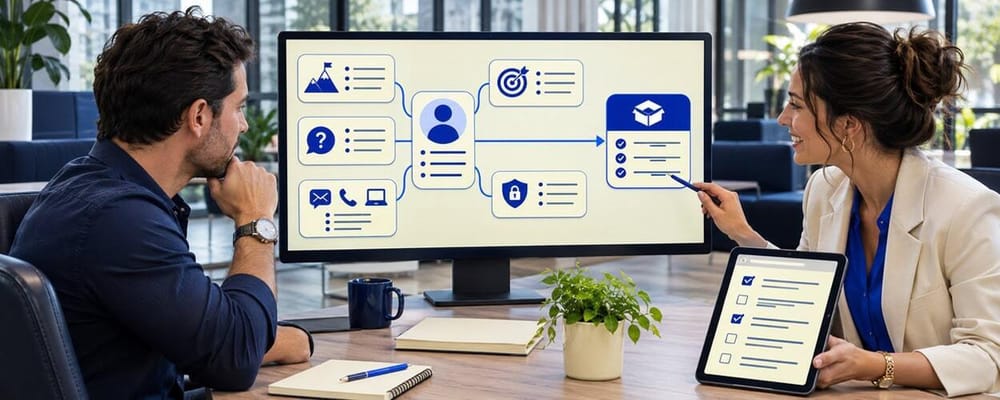
Understanding Your Target Audience Before Building Anything
Every effective sales funnel starts with a precisely defined target audience. Without this, your marketing efforts scatter across people who will never buy.
Key questions to answer before any funnel design:
- What problem is painful enough that your target customers will pay to solve it right now?
- Who signs the contract in a B2B sales environment? (Decision-maker vs. influencer vs. end user)
- What's their purchasing timeline and budget range?
- Where do they spend time online-LinkedIn, YouTube, Google Search, industry forums?
Mini-persona example: Sarah is a marketing agency owner in Toronto doing $50K/month. She has 12 employees and her biggest pain point is unpredictable lead flow-feast-or-famine months. She wants more predictable qualified leads via inbound so she can stop relying on referrals alone. She'll invest $3,000–$5,000/month in a system that works.
To build customer insights like this, use past client interviews, CRM notes, call recordings, Google Analytics behavior data, and search terms from your Meta and Google Ads accounts. These data points sharpen your messaging dramatically.
Funnel Builders Expert typically runs a discovery workshop to map buyer journeys and objections before selecting any specific sales funnel strategies. Six steps to create a sales funnel always start with audience and goals-everything else follows.
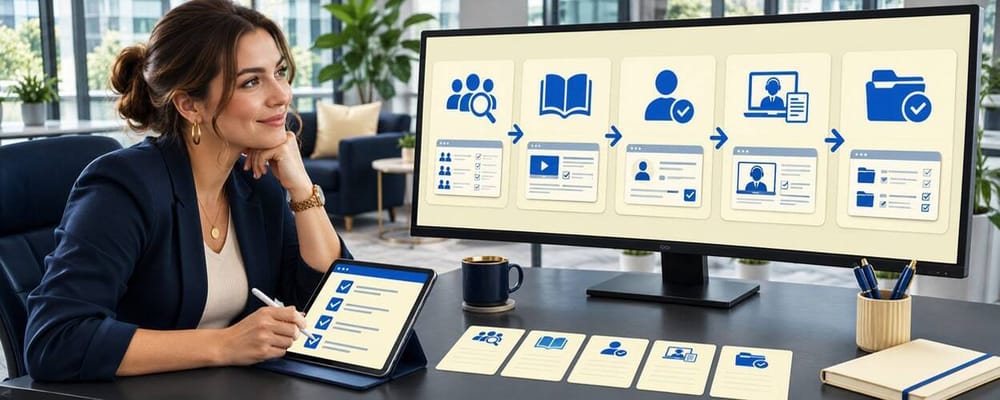
Core Stages of the Sales Funnel Process (Awareness to Retention)
While stage names differ by company, the underlying buying process is consistent. The sales funnel has six stages: Awareness, Interest, Evaluation, Engagement, Action, and Retention.
- Awareness - Awareness is the first stage where prospects discover your brand. Run content, ads, and SEO to get in front of ideal customers. Content marketing attracts potential customers into the sales funnel at this stage.
- Interest - Interest is the stage where prospects show intent to learn more. Offer valuable resources (guides, videos, checklists) that address specific pain points.
- Evaluation - Evaluation involves prospects assessing if your product fits their needs. Provide comparison content, case studies, and ROI calculators to help them decide.
- Engagement - Keep your brand top-of-mind with nurture emails, retargeting ads, and personalized communication. This is the bridge where strangers become marketing-qualified and then sales-qualified leads.
- Action - The prospect makes a purchase decision. Make the buying process frictionless with clear proposals, simple contracts, and risk-reversal guarantees.
- Retention - Retention and advocacy occur post-purchase to encourage repeat business and loyal customer relationships. Retention strategies enhance customer lifetime value by turning one-time buyers into repeat customers. This is not an afterthought-especially for coaches and SaaS-style memberships.
Use automation-tagging, segments, conditional emails-to move people between stages based on behavior. For example, if a lead visits your pricing page three times, tag them as high intent and route them directly to sales calls.
Traffic and Lead Generation: Filling the Top of Your Funnel
Without consistent traffic and impressions, even the best-designed funnel sits empty. Sales funnels can increase business growth by generating more leads-but only when the top is actively fed.
Primary TOFU acquisition channels for B2B and expert businesses in 2026:
- Local SEO - Searches like "business coach Dallas" or "marketing consultant Sydney" convert well. Lead generation strategies include content marketing and SEO as foundational traffic drivers.
- Google Ads - High-intent search campaigns targeting people actively looking for solutions.
- Meta Ads - Interest and lookalike targeting for coaches, consultants, and course creators.
- LinkedIn Ads - Particularly effective for B2B sales targeting by job title, company size, or industry.
- Content and organic SEO - Blog posts, YouTube videos, and podcast appearances that build authority over time.
Ads and organic efforts should push prospects to a single, specific landing page-not a generic homepage. This improves tracking and conversion dramatically.
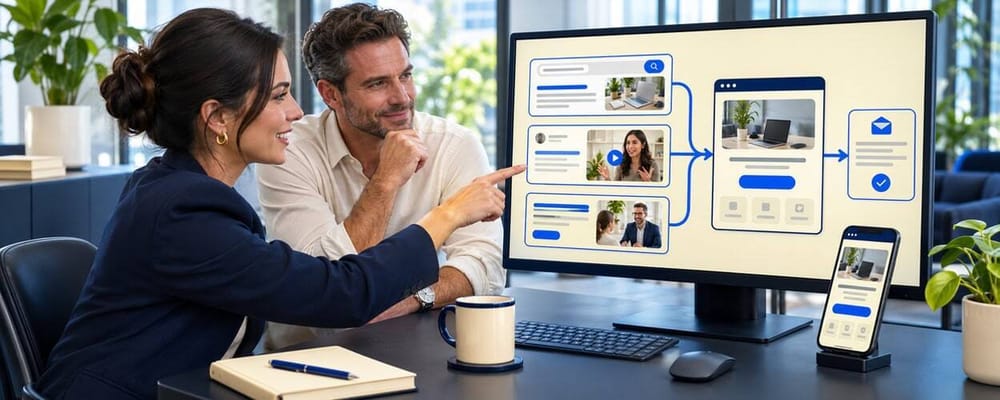
Sample ad-to-funnel flow: Google Ads (keyword: "lead generation system for agencies") → lead magnet landing page → 5-email nurture sequence → strategy call booking page → sales call → close.
Funnel Builders Expert usually starts clients with one to two paid channels plus basic Local SEO to quickly test whether an offer converts before scaling budgets.

Designing a High-Converting Landing Page
A landing page in the funnel context is a single-purpose page built to turn cold website visitors into leads or potential buyers with minimal distractions.
Essential elements of a high-converting landing page:
- Clear headline matching the traffic source (ad copy → landing page headline alignment)
- Subheadline expanding the specific benefit or outcome
- Benefit-driven copy addressing the prospect's pain points, not just features
- Visual proof - customer testimonials, client logos, or results screenshots
- Simple form - name, email, and one qualifying question maximum
- One primary CTA - "Book Your Strategy Call" or "Get the Free Training"
Tailor messaging to your traffic source and target audience. A landing page for a B2B sales consultant should emphasize ROI, case studies, and implementation timelines. A landing page for a fitness coach should lead with transformation stories and emotional outcomes.
Limit navigation links, place social proof above the fold, and match ad copy keywords to headlines for higher Quality Scores in Google Ads (which lowers your cost per click).
Funnel Builders Expert tests different layouts-short vs. long form, video vs. no video-via A/B testing to maximize conversions continually.
Lead Magnets, Free Trials, and Entry Offers That Turn Clicks into Leads
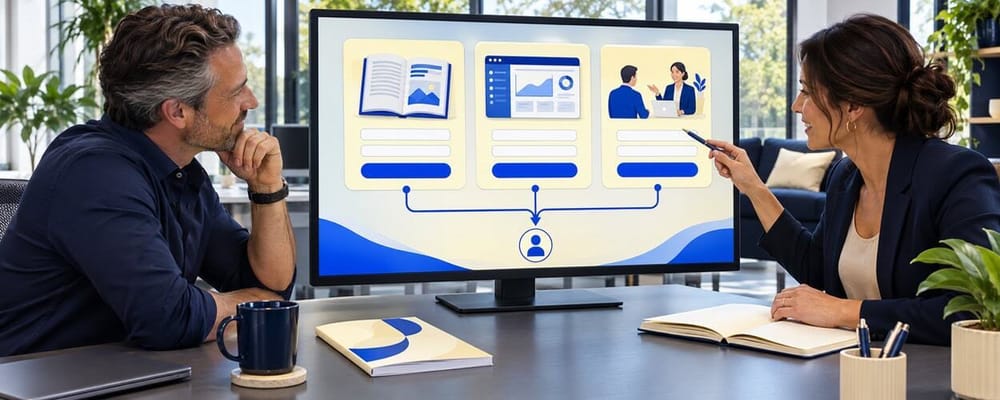
A lead magnet is a valuable resource offered in exchange for contact information. Lead magnets incentivize prospects to provide contact information, which starts the relationship.
High-performing lead magnet formats in 2026:
- Niche checklists or templates (e.g., "The 12-Point Funnel Audit Checklist")
- Short video trainings (under 20 minutes, solving one specific problem)
- Industry benchmark reports (using real data, not fluff)
- Interactive quizzes ("What's Your Funnel Score?")
Free trial funnels work well for SaaS or membership-style offers. Free trials can significantly reduce perceived purchase risk. A typical free trial funnel: sign-up → 7–14 day access → onboarding emails → in-app prompts → account manager outreach → paid conversion. This is your free trial funnel in action.
Sales funnel examples:
- CRM free trial funnel: Google Ad → free trial sign-up page → welcome email + onboarding sequence → feature highlights on days 3, 7, 10 → sales call on day 12 → annual plan offer.
- LinkedIn lead generation coach funnel: Lead magnet (free video training: "Get 10 Qualified Leads Per Week on LinkedIn") → email nurture → webinar invite → strategy call booking → high-ticket program enrollment.
Webinars can generate 20-40% qualified leads from attendees, making them one of the most effective mid-funnel conversion tools for coaches and consultants.
The lead magnet should solve a specific slice of the main problem and naturally lead to your core product or service as the full solution.
Nurturing Qualified Leads: Email, Automation, and Follow-Up Systems
Most funnels leak not at traffic or landing pages, but in weak follow-up. Here's a sobering fact: 79% of leads never convert into sales due to poor funnel management. The fix is a structured nurture system.
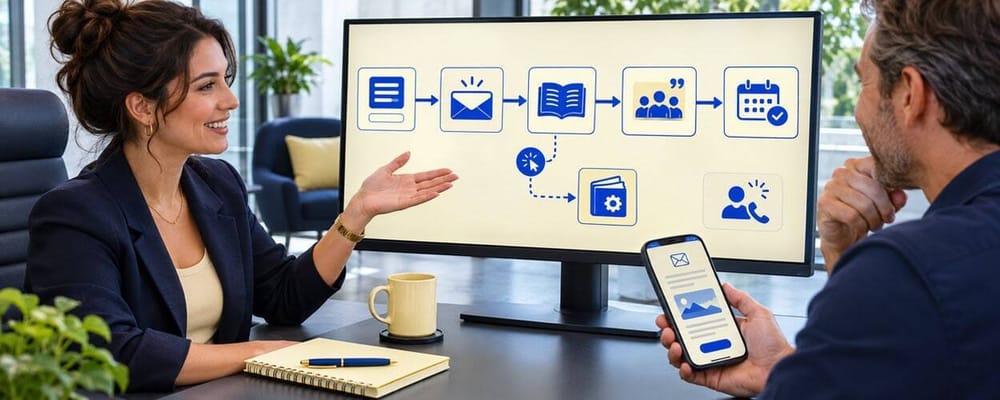
A simple 5–7 email nurture sequence:
- Welcome + value delivery - Deliver the lead magnet, set expectations
- Educational email - Teach something relevant, address a common misconception
- Case study - Show a real result from an existing customer
- Objection handling - Address the #1 reason people don't buy (cost, time, trust)
- Soft CTA - Invite to a webinar, free training, or resource
- Social proof - More customer testimonials and results
- Strong CTA - Direct invitation to book a strategy call or start a trial
Email campaigns nurture leads through the sales funnel stages, and the data backs it up: nurtured leads make 47% larger purchases than non-nurtured leads. Automated nurturing processes improve lead conversion by building trust over time.
Your CRM and marketing automation system should tag leads based on behavior, trigger sequences based on pages visited, and route hot leads to sales teams quickly. Speed matters: responding to form submissions within 5–10 minutes via SMS or call dramatically increases close rates.
Funnel Builders Expert builds done-for-you automation workflows-pipeline stages, reminders, task assignments-so founders don't miss follow-ups that cost them deals.

Bottom-of-Funnel Conversions: Turning Opportunities into Sales
BOFU is where you convert serious prospects into paying clients. The goal of the decision stage is to demonstrate why your offer is the best choice. This section is about practical tactics, not theory.
Common BOFU assets:
- Live demos or 1:1 strategy sessions
- Tailored proposals with clear pricing and scope
- Guarantee or risk-reversal copy ("If you don't see results in 90 days...")
- Targeted remarketing ads for pricing page visitors or cart abandoners
- Case studies specific to the prospect's industry
Standard B2B sales call flow: Discovery questions → diagnosis of the prospect's situation → presentation of your solution → offer and pricing → handling objections → clear next step (contract, onboarding date, payment link).
Ethical urgency tactics that work: limited-time bonuses, capacity caps ("we onboard 5 new agencies per month"), and flexible payment options. Upselling and cross-selling can increase average order value in a sales funnel-offer a VIP tier, an add-on service, or an extended engagement at this stage.
BOFU performance is where many Funnel Builders Expert clients see revenue jump without increasing ad spend, simply by improving the offer and closing sequence.
Specialized Sales Funnel Examples for Different Business Models
Here's a quick tour of concrete sales funnel examples tailored to common business types. What changes from model to model is the sales cycle length, number of decision-makers, and type of offer.
Example 1 - B2B SaaS Solution:
- Paid ads targeting ideal customers by job title/industry
- Free trial sign-up landing page
- Onboarding email sequence + in-app prompts
- Account manager call on day 10
- Conversion to paid annual plan + upsell to premium tier
Sales cycle: typically 14–30 days for deals under $20K.
Example 2 - Service-Based Local Business (Roofing Contractor, Chicago):
- Local SEO + Google Ads targeting "roof repair Chicago"
- Landing page with quote request form
- Phone estimate within 30 minutes
- Job booked + deposit collected
- Post-job referral request automation
Sales cycle: 1–7 days for residential jobs.
Example 3 - Coach/Consultant Funnel:
- Webinar or lead magnet driving initial interest
- 5–7 email nurture sequence
- Strategy call booking via application form
- High-ticket program close ($3,000–$15,000)
- Automated upsell into group program or membership
Sales cycle: 14–45 days depending on price point and trust-building required.
B2B vs B2C Sales Funnels: What Actually Differs?
The psychological stages are similar-awareness, interest, decision-but B2B sales funnels normally have longer sales cycles, more stakeholders, and more mid-funnel education needs.
B2C ecommerce funnel (simplified):
- Meta Ad → product page → add to cart → checkout → order confirmation
- Decision-maker: one person
- Sales cycle: minutes to hours
- Driven by emotional benefits and convenience
B2B consulting funnel:
- Content discovery → lead magnet download → nurture sequence → discovery call → proposal → stakeholder review → contract signed
- Decision-makers: two to five people
- Sales cycle: 30–180 days depending on deal size
- Driven by ROI, risk mitigation, and compliance
In B2B sales, sales enablement content-case studies, ROI calculators, implementation timelines, and industry reports-is essential BOFU material that sales reps use during closing deals.
Funnel Builders Expert primarily focuses on B2B sales and service funnels, but many principles also apply to ambitious B2C experts and course creators targeting prospective customers with high-ticket offers.
Essential Sales Funnel Metrics and KPIs to Track in 2026
Without clear sales funnel metrics, optimization is guesswork. And yet, 68% of businesses fail to measure their sales funnels effectively. Don't be one of them.
Volume metrics:
- Website sessions and source breakdowns
- Click-through rates from paid ads to landing page
- Total leads generated
- Number of qualified leads (MQLs and SQLs)
Conversion metrics:
- Landing page conversion rate (benchmark: 1.5–2.5% average, top performers 5–15%)
- Lead-to-opportunity rate (MQL→SQL average: 13–30%, referral sources often 50%+)
- Opportunity-to-customer rate (average 15–30%, top performers 35–40%)
- Overall funnel conversion rate
Financial metrics:
- Customer acquisition cost (CAC) - what you spend to win one new customer
- Average deal size - higher is better, but must align with sales cycle length
- Sales cycle length - indicates slow spots in the sales process
- Lifetime customer value (LTV) - helps assess business model effectiveness
Referral and retention metrics:
- Referral rates show how many existing customers generate new leads
- Customer retention rate - especially critical for recurring revenue models
Tracking conversion rates at each funnel stage helps pinpoint drop-off points for optimization. Effective sales funnels help businesses identify bottlenecks and improve conversion rates. Customer feedback and behavior analysis help refine messaging and improve the funnel. A well-defined sales funnel increases forecast accuracy for future purchases.
Funnel Builders Expert sets up dashboards in the client's CRM and ad platforms so founders can see where the funnel leaks and where to scale spend confidently.
Optimizing and Scaling Your Sales Funnel Over Time
Sales funnel management helps track leads through the buying journey-but tracking alone isn't enough. You need a continuous optimization cycle: measure → hypothesize → test → implement. The 2026 winners treat funnels as living systems, not one-time projects.
Practical A/B tests to run:
- Headlines and offers on landing pages
- Different lead magnet formats (video vs. PDF vs. quiz)
- Email subject lines and send times
- CTA copy ("Book a Demo" vs. "Get a Strategy Session")
Prioritize fixes by impact: Use funnel analytics to find the biggest leak first. If your landing page converts at 1% while your close rate is 30%, fix the landing page before tweaking email subject lines. Always push prospects through your highest-leverage improvement first.
Scaling approach: Once a funnel is profitable at low ad spend, gradually increase budget. Expand audiences or add channels while watching CAC and ROAS closely. A 20–30% weekly budget increase is safer than doubling overnight.
Funnel Builders Expert offers ongoing optimization retainers where media buying, funnel tweaks, and automation improvements are handled monthly-so the strategic sales funnel keeps improving without adding to your workload.
How Funnel Builders Expert Builds Done-for-You Funnels for Coaches and Service Businesses
This is where DIY funnel tools and a done-for-you agency diverge. Tools like ClickFunnels or Systeme.io give you the building blocks. Funnel Builders Expert builds, launches, and optimizes the entire system for you.
Typical engagement flow:
- Testing and optimization - Ongoing A/B tests, budget scaling, and funnel refinements
- Ad campaigns - Meta Ads, Google Ads, or LinkedIn campaigns launched and managed
- Tech build - CRM setup, automation workflows, integrations, and tracking
- Copy and design - Conversion-focused pages and email sequences
- Funnel architecture - Design the right sales funnel model for your business (webinar, lead magnet, free trial, or hybrid)
- Strategy workshop - Map your ideal customers, customer journey, objections, and offer positioning
We work with coaches, consultants, and course creators who already have validated offers and want to move from one-on-one hustle to systemized, one-to-many client acquisition. If you're generating revenue but drowning in manual outreach, this is the right sales funnel partner for your own business.
Ready to see where your funnel is leaking? Book a funnel assessment call with Funnel Builders Expert and get a clear roadmap for your next 90 days of growth.
Common Mistakes Businesses Make with Sales Funnels
Most broken funnels fail for predictable, fixable reasons. A sales funnel aims to convert leads into paying customers through a series of defined stages-and when any stage is neglected, the whole system underperforms.
Common errors:
- Sending paid ads traffic to generic homepages instead of dedicated landing pages
- Unclear target audience and vague messaging that doesn't speak to specific pain points
- Weak or irrelevant lead magnets that attract tire-kickers instead of potential buyers
- No follow-up sequence after lead capture (this alone explains why so many leads never convert)
- No tracking of key sales funnel metrics-68% of businesses fail to measure their sales funnels, which means they can't improve what they can't see
B2B-specific mistakes:
- Skipping discovery before jumping into a demo or proposal
- Not involving all decision-makers early, leading to stalled deals at the final stage
- Relying on one-off launches instead of building evergreen funnel systems
Simple remedies:
- Create single-offer landing pages for each campaign
- Tighten your ICP and write copy that mirrors how target customers describe their problems
- Write a 5-email nurture sequence (even a basic one outperforms no follow-up)
- Connect ads to CRM with proper UTM tracking
- Set up basic funnel reporting by stage
A structured audit by specialists can often uncover quick wins that increase conversion in 30–60 days. A sales funnel helps identify where prospects drop off-once you know where, the fix is usually straightforward.
FAQ
This section answers practical questions that marketing teams and business owners frequently ask about business sales funnels beyond what's covered above.
How long does it take to see results from a new sales funnel?
Simple lead magnet funnels with paid traffic can show meaningful customer data within 2–4 weeks if traffic volume is sufficient. You'll know quickly whether your offer resonates and your landing page converts.
B2B sales funnels with longer consideration stages may need 60–120 days to see full impact on revenue because of longer sales cycle length. For deals over $10,000, expect the first 30 days for setup and testing, the next 30–60 days for optimization, then scaling once CAC and conversion rates stabilize.
Do small local service businesses really need a full sales funnel?
Even simple systems count as a defined sales funnel: Google Business Profile + landing page + quote form + basic email/SMS follow-up. That's a funnel. Sales funnels guide prospects from awareness to purchase decision regardless of business size.
A structured funnel helps local trades-plumbers, roofers, dentists-capture more leads from Local SEO and Google Ads than phone-call-only approaches. Funnel Builders Expert often starts local clients with a "minimum viable funnel" and then adds automation and remarketing over time based on market trends and results.
Which type of funnel is best for high-ticket coaching or consulting?
For offers above roughly $2,000, a combination of lead magnet or webinar funnel followed by a consultative sales call funnel works best. This approach filters for qualified leads through nurturing leads properly and lets the coach focus time on serious prospects rather than cold DMs.
Simple model: lead magnet → nurture emails → live or evergreen webinar → application form → strategy session → close. This is the sales funnel model that consistently attracts new customers while protecting the coach's time for closing deals with paying clients.
Can I run multiple sales funnels at the same time?
Running multiple funnels in parallel is possible, but avoid spreading traffic and focus too thin-especially with smaller marketing teams. Start with one core funnel per main product or service. Optimize it until it's profitable, and only then layer additional funnels for upsell, cross-sell, or referral programs.
Keep tracking clean with separate campaigns, UTMs, and CRM tags for each funnel. This gives you actionable insights into which funnel drives the best customer relationships and highest ROI for online businesses.
What tools do I need to build and manage a modern sales funnel?
Essential categories:
- Landing page or funnel builder - for creating conversion-focused pages
- Email and automation platform - for nurturing leads and personalized communication
- CRM - for tracking customer interactions and pipeline stages
- Analytics - Google Analytics 4 or similar for tracking website visitors and behavior
- Ad platforms - Google, Meta, LinkedIn for B2B sales campaigns
All-in-one tools exist, but many scaling businesses prefer an integrated stack connected via Zapier or Make. Funnel Builders Expert selects and configures tools based on each client's size, tech comfort, and growth goals-often standardizing the stack to simplify operations and retain clients long-term through customer loyalty and results.

Website.
Ecommerce Website
Blog Website
Website Design
Web Management
WordPress Website
SEO - AIO
AI Optimization
Local SEO
On-Off Page
SEO Audits
Technical SEO
Paid Advertising
Display Ads
Meta Ads
Google Ads
Linkedin Ads
TikTok Ads
CRM Automation
CRM Setup
Email Marketing
Lead Management
Pipeline Automation
SMS Marketing
Disclaimer: This site is not affiliated with or endorsed by Google or Meta™. All content is for educational purposes only and does not guarantee results or earnings. Your success depends on your own efforts, experience, and circumstances. Financial examples are illustrative, not promises. Always seek professional advice before making business or financial decisions. By using this site, you agree we are not liable for outcomes based on this information.
2026 © Funnels Builders Expert, a Sydney Website Design Agency product - Privacy Policy - Terms & Conditions